
Atrial Septal Defect (ASD) Closure
 About
About
What is the Atrial Septal Defect (ASD) Closure Procedure?
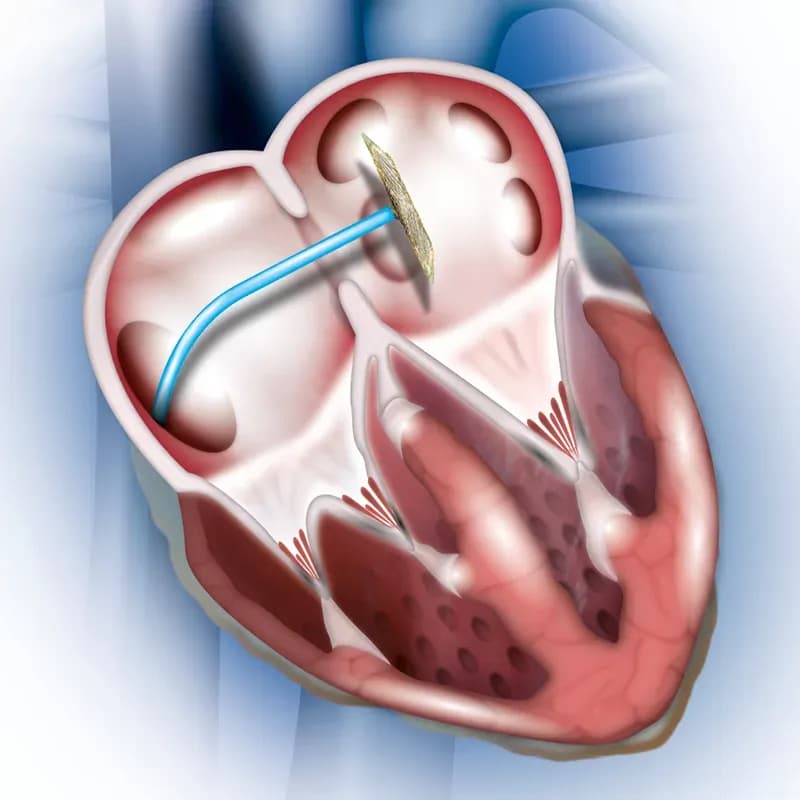
An Atrial Septal Defect (ASD) is a hole in the wall (septum) that separates the two upper chambers of the heart (atria). This allows oxygen-rich blood to mix with deoxygenated blood, increasing the workload on the heart and lungs and potentially leading to long-term complications.
The Atrial Septal Defect (ASD) closure procedure is a minimally invasive treatment where a specially designed device is inserted via a catheter to seal the opening. This Atrial Septal Defect (ASD) Closure procedure in Mumbai offers a safe and effective alternative to open-heart Atrial Septal Defect (ASD) surgery, helping prevent complications like pulmonary hypertension, arrhythmia, and heart failure.
How It's Done
How Is Atrial Septal Defect (ASD) Closure Done?
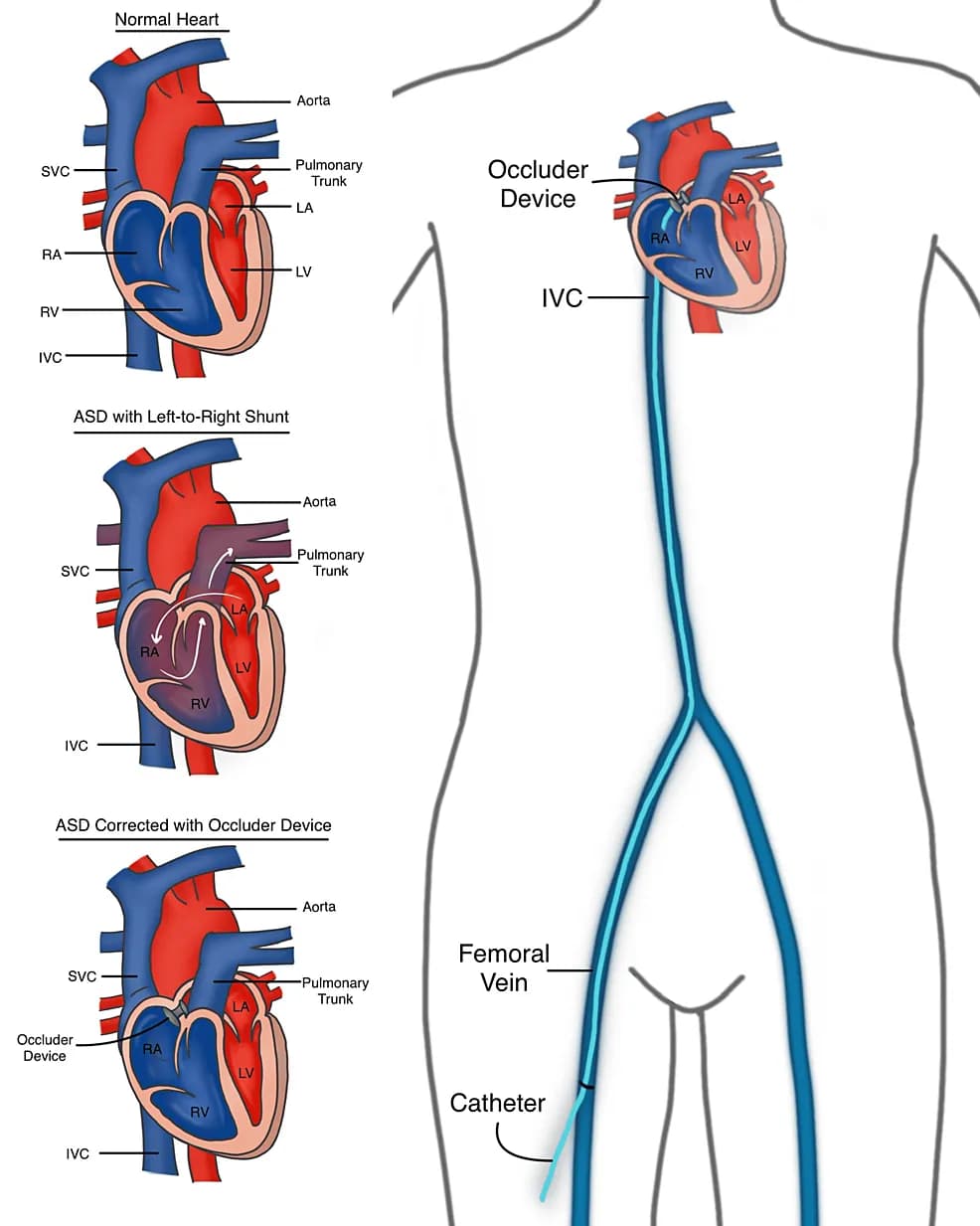
A small incision is made in the femoral vein in the groin.
A catheter is guided to the heart using fluoroscopy, TEE, and ICE for defect visualization.
The size of the atrial septal defect is carefully assessed.
A Atrial Septal Defect (ASD) closure device is positioned across the defect via catheter.
The device is released once proper positioning is confirmed.
The catheter is withdrawn, and the puncture site is closed with a stitch or compression dressing.
Post-procedure recovery is generally faster, with lower chances of complications.
Who it’s for?
Who Needs Atrial Septal Defect (ASD) Closure?
Atrial Septal Defect (ASD) closure is recommended for patients with a diagnosed atrial septal defect and meet one or more of the following criteria:
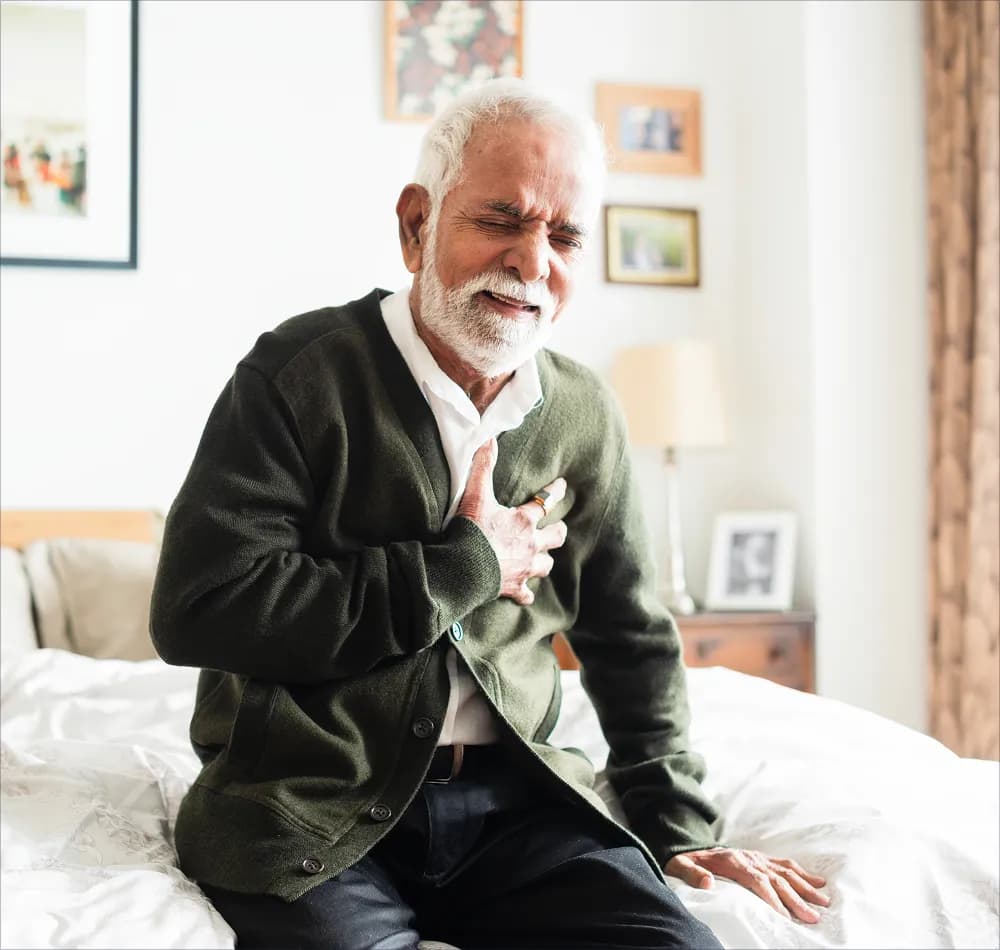
 Symptoms such as fatigue, shortness of breath, or palpitations
- Evidence of right heart enlargement on imaging
- History of stroke or embolism with no other cause
- Risk of developing pulmonary hypertension
- Significant left-to-right shunting of blood (Qp:Qs ratio > 1.5:1)
- Planned pregnancy, especially in women with large Atrial Septal Defect (ASD)
- Desire to avoid open-heart surgery with a minimally invasive approach
 Benefits of Atrial Septal Defect (ASD) Closure
What are the Benefits of Atrial Septal Defect (ASD) Closure?

Minimally invasive
Performed via catheter through a small groin incision

Heart protection
Prevents long-term strain on the heart and lungs by keeping the oxygenated and non-oxygenated blood separate

Symptom relief
Reduces breathlessness, fatigue, and arrhythmia risk

Stroke prevention
Seals the Atrial Septal Defect (ASD) to reduce the risk of clots passing through

Shorter hospital stay
Most patients are discharged within 1-2 days

Fast recovery
Return to daily life in less than a week
Avoids open surgery
No sternotomy or heart-lung machine needed
Long-term success
Excellent outcomes with low complication rates
Outcomes of Procedure Delay
Risks of Delay of Atrial Septal Defect (ASD) Closure
- Progressive enlargement of the right heart chambers
- Risk of developing pulmonary arterial hypertension
- Increased chance of atrial arrhythmias (irregular heartbeat)
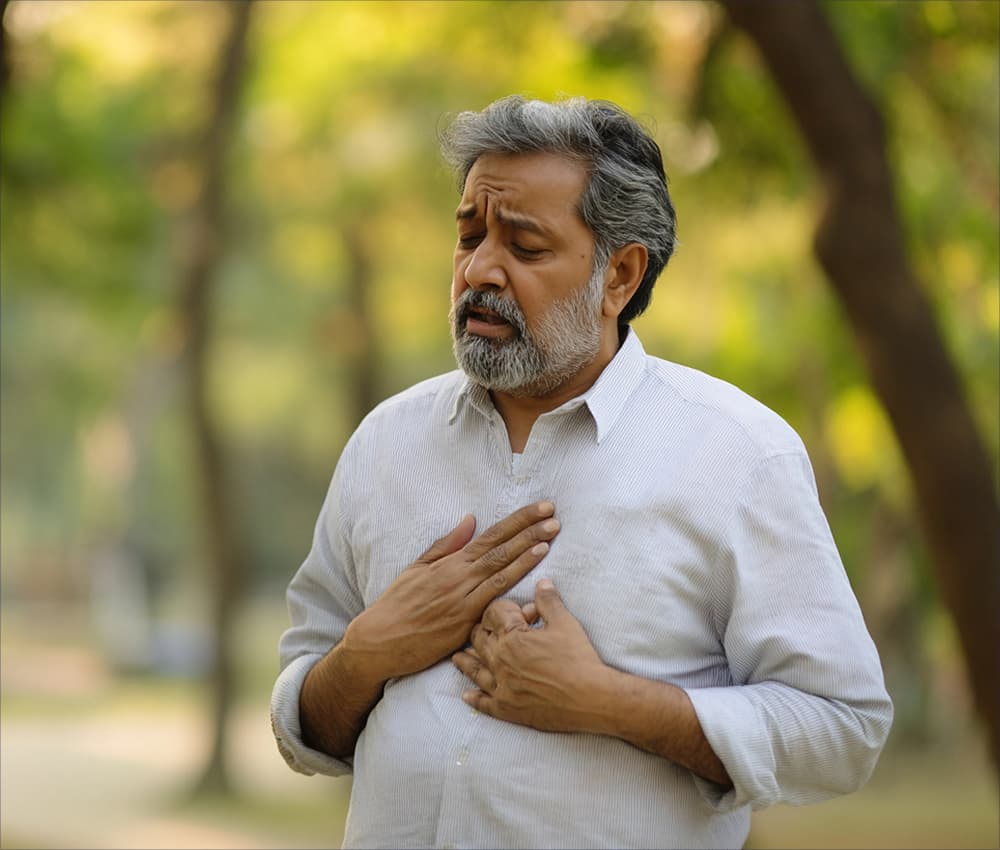
- Ongoing symptoms such as fatigue and shortness of breath
- Higher long-term risk of stroke and embolism
- Reduced exercise tolerance and heart function

Procedure Timeline
Recovery & Follow-Up Timeline

Day of Procedure
Most patients are discharged within 24–48 hours after the Atrial Septal Defect (ASD) closure procedure.

Month 1
First follow-up visit and echocardiogram to confirm device position and healing.

6 Months
Evaluation of heart function and adjustment of any medication.

1 Year
Final follow-up to ensure complete closure and absence of symptoms.

Beyond 1 Year
No routine follow-up unless recommended by your cardiologist in Mumbai.
What Sets us Apart
Why Choose Heart Valve Experts?

Advanced Imaging & Navigation
Real-time guidance using 3D echocardiography and fluoroscopy ensures accurate device placement.

Expert Atrial Septal Defect (ASD) Closure Team
Led by a leading cardiologist in Mumbai, our team has extensive experience in performing device-based Atrial Septal Defect (ASD) closures using state-of-the-art, minimally invasive techniques for safe and effective results.

Tailored Device Selection
We select the most appropriate atrial septal defect closure device based on the size, location, and structure of your Atrial Septal Defect (ASD).

No Open-Heart Surgery
Our catheter-based method avoids sternotomy, ensures quicker healing, and reduces hospital stays.

Complete Cardiac Care
From diagnosis and device selection to follow-up and recovery, we offer a comprehensive heart care program.
Patient Success Stories
Every success story begins with the right care. Here are a few:
“Doctors performed my father’s Transcatheter Aortic Valve Implantation (TAVI) procedure successfully and explained everything with great care. Truly grateful for his expertise and compassionate team.”
MRS. PREETI MANOHARAN
FAQs