
Transcatheter Aortic Valve Implantation (TAVI/TAVR) Surgery/Procedure
 About
What is Transcatheter Aortic Valve Implantation (TAVI) Surgery/Procedure?
Transcatheter Aortic Valve Implantation (TAVI) is a minimally invasive procedure used to treat a narrowed aortic valve, also known as aortic stenosis. It is also referred to as TAVR surgery/procedure, which stands for Transcatheter Aortic Valve Replacement. Instead of opening the chest as in traditional surgery, Transcatheter Aortic Valve Implantation (TAVI) surgery is a suture-less procedure.
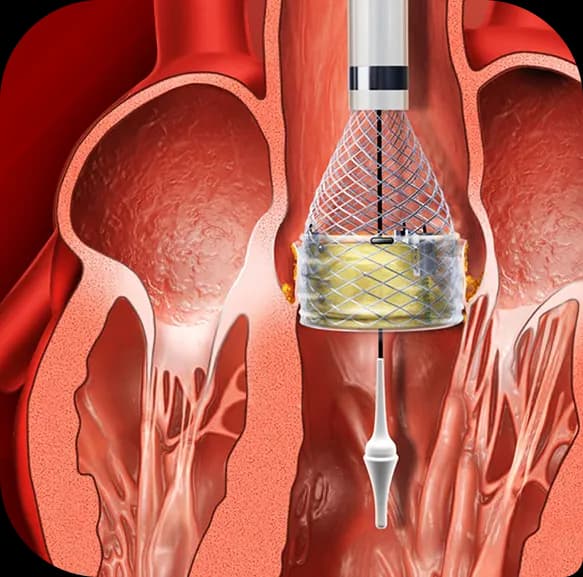
It involves inserting a new valve through a catheter, usually via the femoral artery in the thigh, and positioning it inside the damaged valve. The Transcatheter Aortic Valve Implantation (TAVI) procedure is especially recommended for patients who are at high risk for open-heart surgery due to advanced age or other underlying health conditions.
Patients looking for specialist evaluation can learn more about our Transcatheter Aortic Valve Implantation (TAVI) treatment in Mumbai.
Who It’s For?
Who Needs Transcatheter Aortic Valve Implantation (TAVI) Surgery/Procedure?
Severe aortic stenosis
Narrowing of the aortic valve with symptoms such as chest pain, breathlessness, or fainting.
Advanced age
Older patients for whom open-heart surgery poses a higher risk or recovery challenges.
Previous cardiac surgery
Repeat open-heart surgery carries higher risks due to scar tissue and bleeding. For patients at high surgical risk, TAVI may carry lower procedural risk than open surgery; your team will discuss your individual risks.
Chronic kidney disease
Traditional surgery increases kidney complications. For patients at high surgical risk, TAVI may carry lower procedural risk than open surgery; your team will discuss your individual risks.
Chronic lung conditions
Conditions like COPD increase the risk of complications during open-heart surgery.
Multiple comorbidities
Patients with combined health issues such as diabetes, hypertension, or prior stroke are often better suited for minimally invasive options like Transcatheter Aortic Valve Implantation (TAVI).

 Benefits of Transcatheter Aortic Valve Implantation (TAVI)
What are the Benefits of Transcatheter Aortic Valve Implantation (TAVI) Surgery/Procedure?

Minimally invasive
TAVI is performed through a catheter, usually via the groin, without opening the chest.

Recovery
Recovery is often quicker than after open surgery, but varies. Most patients are discharged within 3 to 5 days.

Surgical risk
For patients at high surgical risk, TAVI may carry lower procedural risk than open surgery; your team will discuss your individual risks.

Improved symptoms
Relief from chest pain, breathlessness, fatigue, and dizziness.

Evidence from trials
Clinical trials have compared TAVI with open heart surgery in people at different levels of surgical risk. Survival and recovery depend on age, other health conditions and valve anatomy, and your heart team explains what the evidence means for your case.

Anaesthesia
Often performed under local anaesthesia with sedation.
Outcomes of Procedure Delay
Risks of Delay of Transcatheter Aortic Valve Implantation (TAVI)/Transcatheter Aortic Valve Replacement (TAVR) Surgery/Procedure
- Worsening symptoms like breathlessness, chest pain, and fatigue
- Increased strain on the heart, leading to heart failure
- Higher chances of emergency hospitalisation
- Risk of fainting or sudden collapse
- Decline in overall physical strength and activity level
- Potential damage to other organs due to poor blood flow


Procedure Timeline
Transcatheter Aortic Valve Implantation (TAVI) Procedure Timeline & Recovery

Day 1
Hospital admission and pre-procedure diagnostics (CT scan, echocardiogram, blood tests)

Day 2
Transcatheter Aortic Valve Implantation (TAVI) procedure performed using a catheter-based approach, usually under conscious sedation.

Day 3–5
Observation and recovery in the hospital ICU; discharge typically occurs during this period with post-care instructions and a medication plan.

Week 1–2
Rest at home with light activity, monitor the catheter site, take prescribed medications, and attend the first follow-up with your Transcatheter Aortic Valve Implantation (TAVI) specialist

Week 2–3
Gradual return to daily routines based on recovery progress; continue a heart-healthy lifestyle and regular monitoring

Beyond Week 3
Resume normal activities; maintain follow-up appointments and lifestyle adjustments for long-term heart health
Procedure Follow Up
Long-Term Follow Up After Transcatheter Aortic Valve Implantation (TAVI) Procedure
Long-term durability data are still being collected, and like all bioprosthetic valves, TAVI valves can show structural deterioration over time. Follow-up echocardiography is needed.
The 10-year NOTION trial, which evaluated earlier generation Transcatheter Aortic Valve Implantation (TAVI) devices, found that:
 Transcatheter Aortic Valve Implantation (TAVI) valves had comparable long-term clinical outcomes to surgical valves, with similar rates of mortality, stroke, and myocardial infarction.
- Transcatheter Aortic Valve Implantation (TAVI) valves showed a lower rate of severe structural valve deterioration (SVD) compared to surgical valves at 10 years.
- Hemodynamic performance was favorable for Transcatheter Aortic Valve Implantation (TAVI) valves.
- The overall rate of bioprosthetic valve failure was similar between Transcatheter Aortic Valve Implantation (TAVI) and surgical valves.
This highlights the importance of long-term planning with your heart team, considering factors like valve type, patient anatomy, and individual risks to ensure the best possible care throughout your lifetime.

What Sets us Apart
Why Choose Heart Valve Experts?

TAVI at Heart Valve Experts
Our specialists perform TAVI, including in complex and high-risk cases.

Affordable, Transparent Pricing
We provide high-quality heart care services at competitive rates, making advanced cardiac care more accessible.

Alternative access
Alternative access routes (transcarotid, transaxillary) are available where femoral access is unsuitable.

Structural heart procedures
Structural heart procedures offered: TAVI, TEER (MitraClip), TMVR, LAAO, Balloon Mitral Valvotomy (BMV) and device closures, including PVL closure.

Heart team
Every patient is cared for by a dedicated heart team comprising interventional cardiologists, cardiac surgeons, radiologists, anesthesiologists, and specialised nurses.
Your Consultation
What to expect at your consultation
- What should I bring to my consultation?
- Please bring your previous reports, such as echocardiogram (echo), ECG, CT scan and angiography reports, along with discharge summaries and a list of the medicines you take.
- What happens during the consultation?
- The doctor reviews your medical history and reports, examines you and explains your heart condition. If more information is needed, further tests may be advised.
- Will I be told about all treatment options?
- Yes. The doctor discusses the options that may suit you, including medicines, catheter-based procedures and surgery, with their possible benefits and risks, so you can decide with your family.
- Can I get an opinion on my existing reports first?
- Yes. You can share your reports for a review before you visit. The doctor will tell you whether an in-person assessment is needed.
FAQs