Had an artificial heart valve placed recently? Or perhaps it has been a few years and you are starting to wonder if it is still working as it should? That concern is completely valid. Prosthetic valves are built to last, but they are not immune to problems, and knowing what to watch for can make a real difference. Here is everything you need to know about the warning signs, the tests, and what happens next.
Not all artificial valves age the same way, and the type you have shapes both the risks you carry and the symptoms to watch for.
| Mechanical Valve | Tissue (Bioprosthetic) Valve | |
| Material | Carbon and metal | Animal tissue (porcine or bovine) |
| Lifespan | 30+ years | 10 to 20 years |
| Blood thinners | Required lifelong | Not usually required |
| Main failure modes | Thrombosis, pannus ingrowth, endocarditis, structural failure | Calcification, leaflet stiffening or tearing |
| Key risk | Clot formation | Structural deterioration over time |
Both types can develop leaks, blockages, or become infected. Knowing which valve you have helps your doctor put your symptoms in the right context.
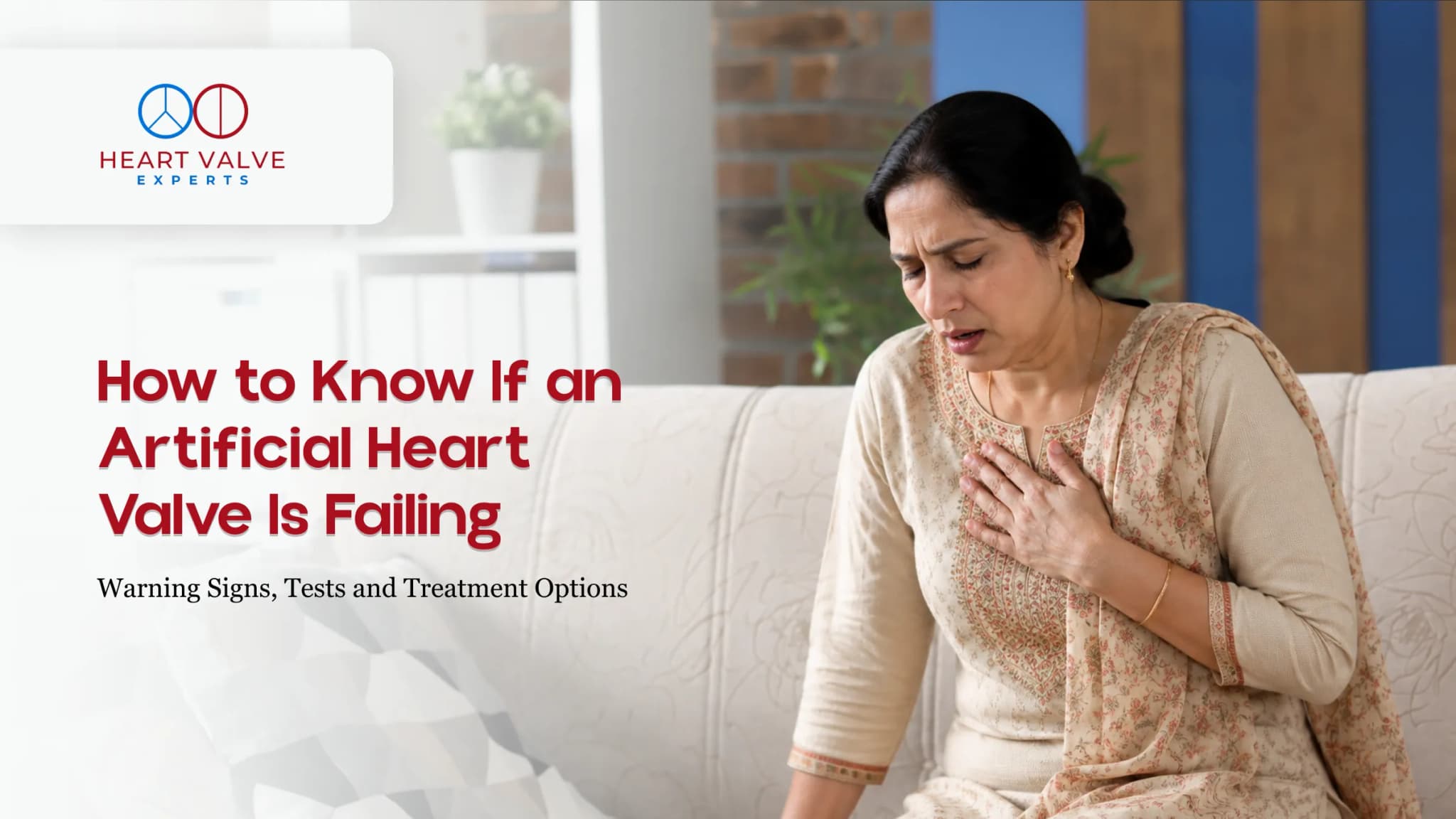
Here is something worth knowing: symptoms of prosthetic valve dysfunction often develop gradually. That makes them easy to write off as tiredness, getting older, or something unrelated. The symptoms of heart valve failure to pay attention to include:
If you have a mechanical valve, you are likely familiar with the soft clicking sound it makes with every heartbeat. That click is actually useful. If it ever sounds muffled, changes in any way, or disappears entirely, treat it as a warning sign and get it checked promptly.
Some presentations cannot wait for a scheduled appointment. If you or someone with a prosthetic valve experiences any of the following, go to the emergency department straight away:
These can signal valve thrombosis, acute regurgitation, or endocarditis, all of which are time-sensitive emergencies.
When valve dysfunction is suspected, your cardiologist will piece together the picture using a combination of tests. Each one tells a different part of the story.
Transthoracic Echocardiogram (TTE)The starting point for most investigations. It uses ultrasound to show how the valve is opening and closing and how well the heart is pumping overall.
Transesophageal Echocardiogram (TEE)A more detailed echo where a small probe is passed into the oesophagus for a closer view. Better at catching clots, infection, and leaks that a standard echo can miss.
FluoroscopyUsed specifically for mechanical valves. It checks whether the valve leaflets are moving properly and can quickly flag any obstruction.
Cardiac CTGives detailed images of the valve’s anatomy. Particularly useful for telling apart a blood clot and fibrous tissue buildup, which look similar but need very different treatments.
Blood TestsCan reveal signs of infection, internal bleeding from red cell damage, or a drop in anticoagulation levels that raises clot risk.
The cause of valve failure matters as much as the severity, because treatment differs significantly depending on what is actually happening.
| Obstruction (Stenosis) | Leak (Regurgitation) | Infection (Endocarditis) | |
| What it means | The valve has narrowed and is blocking blood flow | The valve is leaking and letting blood flow the wrong way | The valve has become infected |
| Usually caused by | Clots or tissue buildup in mechanical valves | A gap in the valve itself or around where it was stitched in | Bacteria reaching the valve |
| Symptoms to watch | Breathlessness, fatigue, fainting | Breathlessness, fatigue, unexplained anaemia | Fever, chills, feeling suddenly unwell |
| How urgent is it | Depends on how severe | Depends on how severe | Emergency, do not wait |
Treatment is matched to the cause, the severity of dysfunction, and what the patient can tolerate. There is rarely one universal answer, which is why specialist assessment matters.
Getting an accurate diagnosis early gives you and your care teaam the most options. That is what the follow-up schedule is designed to protect.
If you have a prosthetic valve and something does not feel quite right, or if you simply have questions about where you stand, the team at Heart Valve Experts is here to help. Whether you need a second opinion, want to understand your monitoring schedule, or are exploring what re-intervention might look like, our specialists will give you clear answers without unnecessary pressure. Reach out to us today and let us help you stay ahead of it.
The most common signs include worsening breathlessness, unusual fatigue, swelling, palpitations, dizziness, and for mechanical valves, a change in the clicking sound. Any new or worsening cardiac symptoms in someone with a prosthetic valve should be assessed promptly with an echocardiogram.
Symptoms include breathlessness, fatigue, chest discomfort, palpitations, fainting, and swelling. A muffled or absent clicking sound from the valve is a specific warning sign that warrants urgent evaluation.
Breathlessness, fatigue, reduced exercise tolerance, ankle swelling, palpitations, dizziness, and chest discomfort are the most common presentations, whether the valve is native or prosthetic.
Tissue valves deteriorate over time, typically within 10 to 20 years. Re-intervention is usually required, and depending on your anatomy and overall risk, this may be a surgical replacement or a transcatheter valve-in-valve procedure.
In some cases, yes. Valve thrombosis may respond to thrombolytic medication, and small paravalvular leaks can sometimes be closed with a catheter-based device. Significant structural failure, severe infection, or advanced degeneration usually requires a more definitive intervention
Mechanical valves can last more than 30 years with proper anticoagulation management. Tissue valves typically last between 10 and 20 years, though this varies based on age at implantation, valve position, and individual factors.
Most people with a well-functioning prosthetic valve can exercise safely. Your cardiologist will guide you on appropriate activity levels based on your valve type, heart function, and any other conditions. Regular moderate exercise is generally encouraged as part of a heart-healthy lifestyle.

About The Author
With over 15 years of expertise, Dr. Phatarpekar is recognised as a renowned interventional cardiologist in Mumbai, specialising in complex coronary interventions, structural heart procedures, and pioneering work in Transcatheter Aortic Valve Implantation (TAVI).
● Blogs