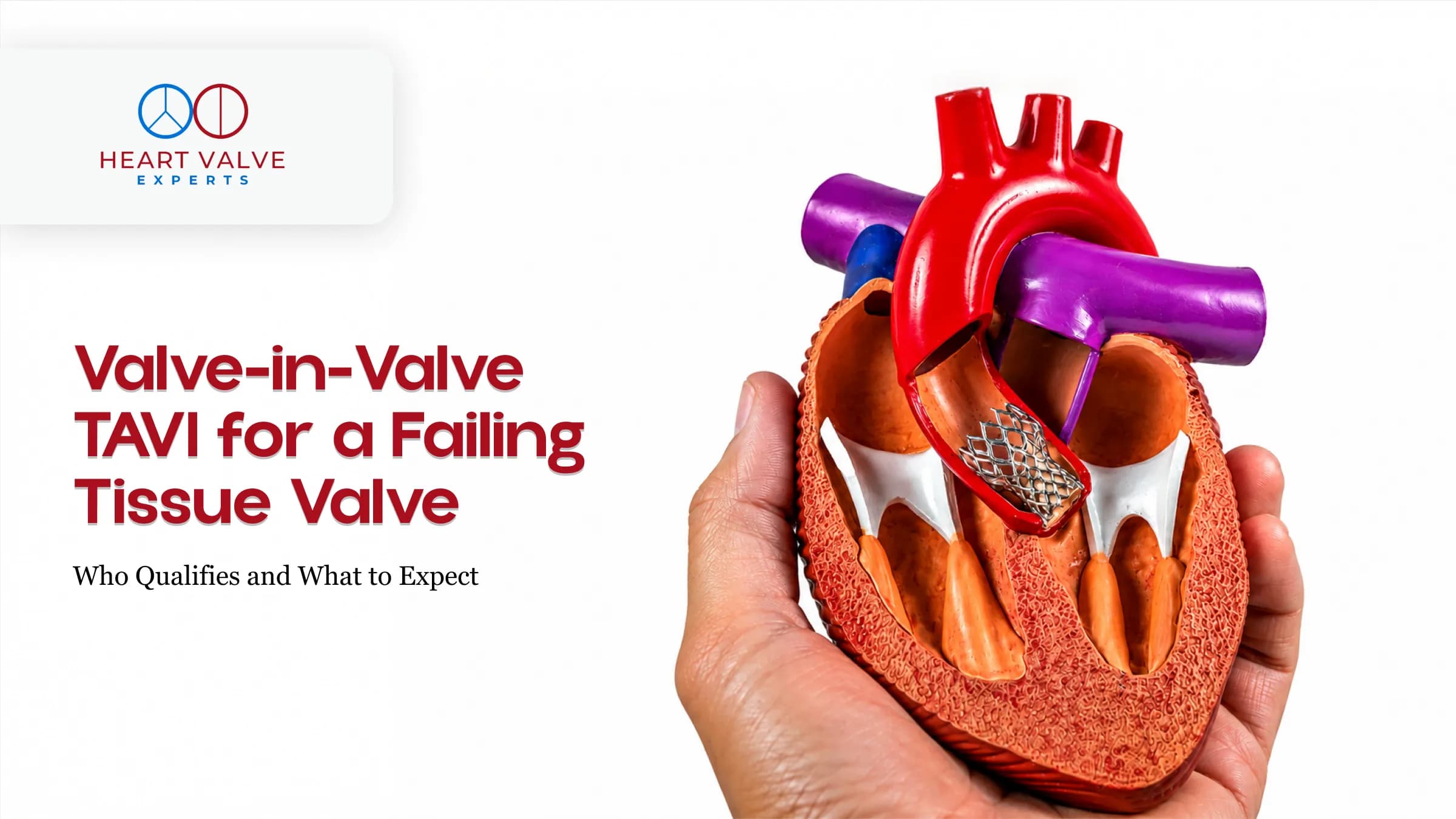
Living with a tissue heart valve comes with the understanding that it may not last forever. Hearing that your valve is beginning to wear out can feel worrying, especially if you think another open-heart surgery is the only option.
Fortunately, that is no longer true for many patients.
For selected individuals, valve-in-valve TAVI offers a minimally invasive way to treat a failing bioprosthetic valve without removing the original one. Understanding how the procedure works, who qualifies, and what recovery looks like can help you make informed decisions if your tissue valve is no longer functioning as it should.
Key Takeaway
A failing tissue valve does not automatically mean you need another open-heart surgery. Many patients may be suitable for a minimally invasive valve-in-valve TAVI procedure.
A bioprosthetic valve, also called a tissue valve, is made from specially treated animal tissue. These valves are widely used because they function well and usually do not require lifelong blood-thinning medication.
The trade-off is that they are not designed to last forever.
With every heartbeat, the valve opens and closes. After years of continuous use, the leaflets can begin to:
Doctors call this structural valve deterioration.
The important thing to remember is that this does not mean your original surgery failed. It simply means the biological valve has reached the end of its natural lifespan.
Once the valve starts affecting blood flow or making your heart work harder, your cardiologist may recommend another procedure to restore normal valve function.
One of the biggest challenges with bioprosthetic valve failure is that the symptoms often develop gradually.
Many people assume they are simply getting older or becoming less fit. Others notice they cannot walk as far or climb stairs as easily as before but do not immediately connect it to their heart valve.
Common symptoms of bovine (cow) valve failure or a failing tissue valve include:
| If you’re experiencing | It may indicate |
| Breathlessness | Valve narrowing or leakage |
Fatigue | Reduced heart efficiency |
| Swollen ankles | Extra strain on the heart |
| Dizziness or fainting | Reduced blood flow |
| Palpitations | Changes in heart rhythm |
These symptoms do not always mean your valve has failed. However, they should never be ignored.
An echocardiogram is usually the first test used to assess whether the valve is narrowing, leaking, or placing extra pressure on the heart. If the scan findings match your symptoms, your Heart Team will discuss the most appropriate treatment options.
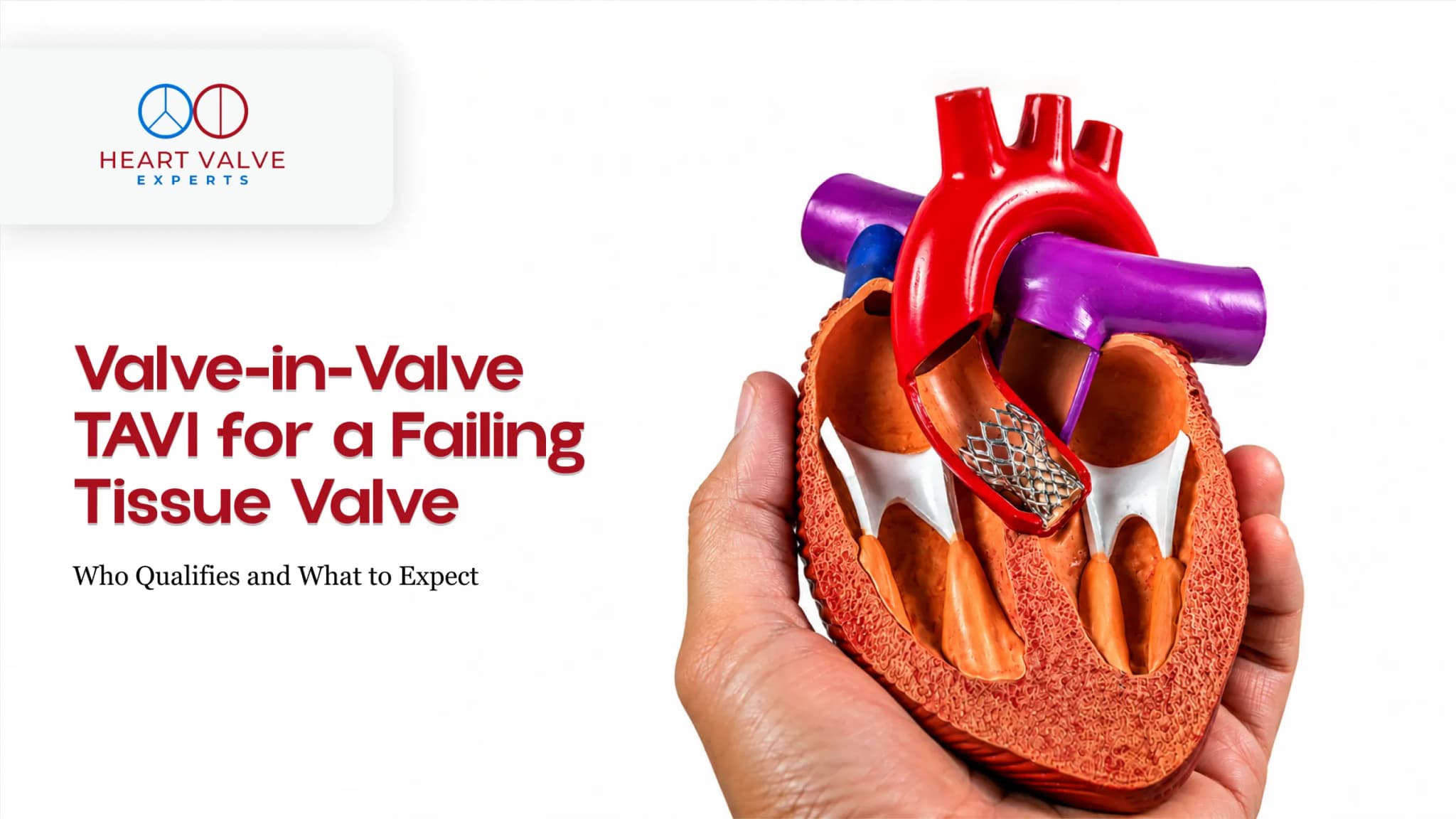
Valve-in-valve TAVI is a minimally invasive procedure used to treat a failing bioprosthetic valve.
Instead of removing the old valve through another open-heart operation, your specialist places a new valve inside the existing one using a thin catheter, usually inserted through an artery in the groin.
Once the new valve is expanded, it immediately takes over the job of regulating blood flow.
Originally developed for patients who were considered too high risk for another operation, valve-in-valve TAVI is now an established treatment option for many carefully selected patients as technology and clinical experience continue to advance.
Not everyone with a failing tissue valve will be suitable for this procedure.
Choosing the right treatment depends on several factors, including your overall health, the condition of your existing valve, and your heart anatomy.
A multidisciplinary heart team carefully reviews these details before recommending the safest approach.
There is no one-size-fits-all answer. The goal is always to choose the treatment that offers the safest procedure and the best long-term outcome for your specific condition.
Every successful valve-in-valve TAVI begins with detailed CT planning.
This scan gives your Heart Team a precise picture of your heart and existing bioprosthetic valve, allowing them to determine whether the procedure can be performed safely.
A cardiac CT helps assess:
These measurements influence every stage of the procedure. In some patients, CT planning may also reveal that another treatment option would provide a safer and more durable result.
That is why careful imaging is one of the most important steps before any valve-in-valve TAVI procedure.
When a tissue valve fails, there is rarely just one treatment option.
For some patients, valve-in-valve TAVI offers an excellent minimally invasive solution. For others, repeat open-heart surgery may provide better long-term results.
The decision depends on factors such as:
Your heart team carefully weighs all these factors before recommending the most appropriate approach.
| Feature | Valve-in-Valve TAVI | Redo Open-Heart Surgery |
| Procedure | New valve placed inside the existing valve through a catheter | Existing valve removed and replaced surgically |
| Access | Through the groin artery | Chest reopened |
| Recovery | Usually quicker | Typically longer |
| Hospital stay | Usually shorter | Usually longer |
| Best suited for | Intermediate or high surgical risk with suitable anatomy | Lower surgical risk or complex valve anatomy |
| Main limitation | Not suitable for every valve anatomy | More invasive procedure |
Neither treatment is automatically better. The right choice is the one that offers the safest procedure and the best long-term outcome for your individual condition.
One of the biggest advantages of valve-in-valve TAVI is the relatively quick recovery compared with repeat open-heart surgery.
Most patients spend only a few days in the hospital before returning home.
Recovery varies from person to person, but many patients gradually notice improvements in breathlessness, energy levels, and exercise tolerance over the following weeks.
Keeping up with follow-up appointments is just as important as the procedure itself. Regular monitoring helps ensure your replacement valve continues to function well for years to come.
Advances in structural heart interventions have transformed the way failing bioprosthetic valves are treated.
For many suitable patients, valve-in-valve TAVI offers an effective, minimally invasive alternative to repeat surgery, with shorter recovery and excellent clinical outcomes.
The first step is understanding whether you are a suitable candidate.
At Heart Valve Experts, every patient undergoes a comprehensive evaluation that includes advanced imaging, multidisciplinary Heart Team discussions, and personalised treatment planning. Whether you need valve-in-valve TAVI, redo surgery, or simply a second opinion, our goal is to help you make informed decisions with confidence.
Experiencing symptoms after a previous tissue valve replacement? Schedule a consultation with Heart Valve Experts to understand your options and receive expert guidance tailored to your heart.
Valve-in-valve TAVI is a minimally invasive procedure where a new heart valve is placed inside a failing bioprosthetic valve using a catheter, avoiding the need to remove the original valve.
Common signs include breathlessness, fatigue, reduced exercise tolerance, dizziness, swelling in the legs, and palpitations. An echocardiogram helps confirm whether the valve is narrowing or leaking.
No. Suitability depends on factors such as the size and type of your existing valve, your heart anatomy, surgical risk, and findings on your CT scan.
Most patients return home within a few days, and many resume normal daily activities sooner than they would after repeat open-heart surgery. Recovery time varies depending on your overall health.
If valve-in-valve TAVI is not the safest option, your Heart Team may recommend redo open-heart surgery or another treatment based on your specific condition and long-term needs.

About The Author
With over 15 years of expertise, Dr. Phatarpekar is recognised as a renowned interventional cardiologist in Mumbai, specialising in complex coronary interventions, structural heart procedures, and pioneering work in Transcatheter Aortic Valve Implantation (TAVI).
● Blogs