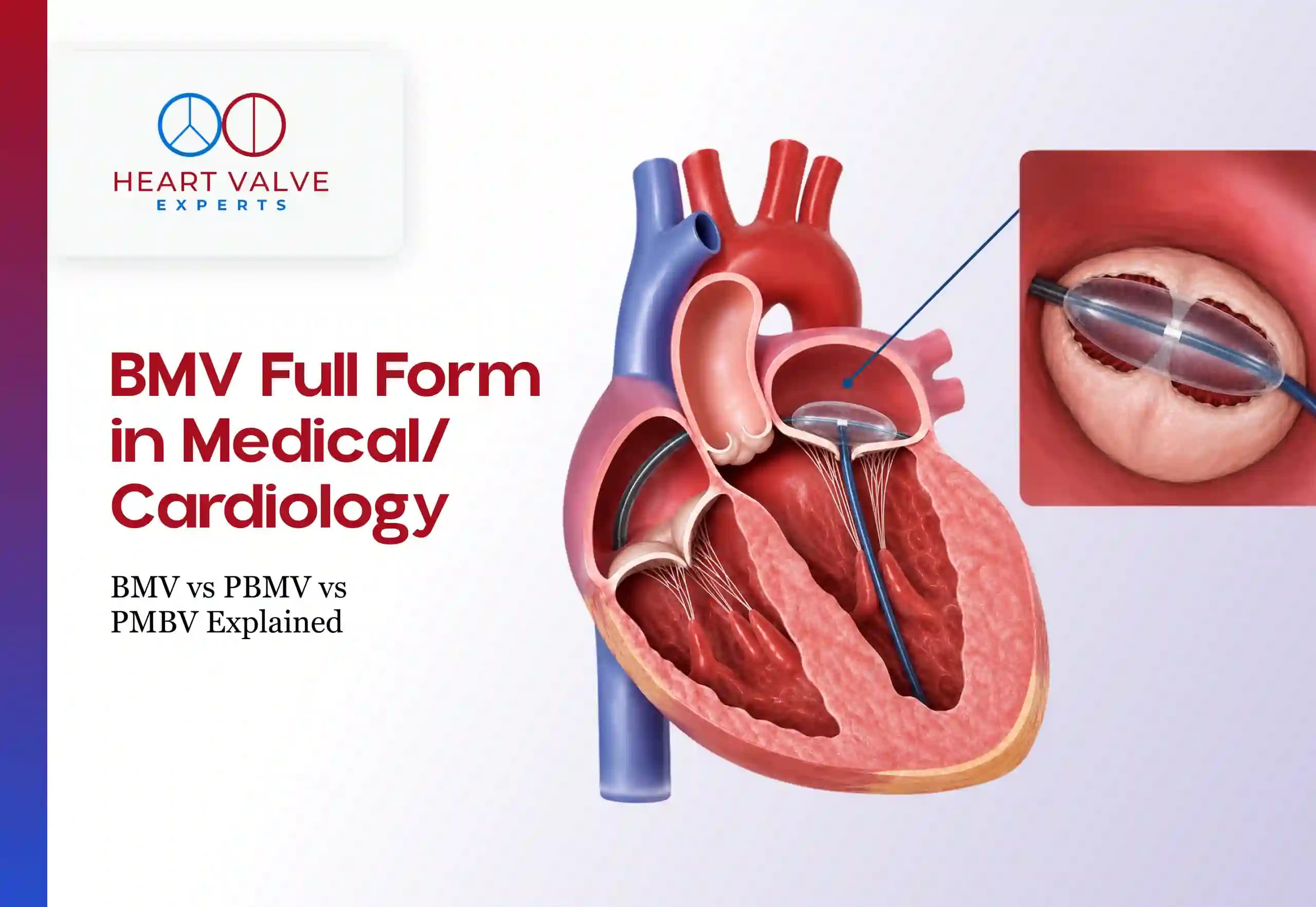
If your cardiologist has recommended a balloon valvotomy/valvuloplasty procedure for a narrowed mitral valve (the valve that acts as a one-way door between the two left chambers of your heart) and you have seen different abbreviations being used across reports and prescriptions, here is what you need to know.
They Are All the Same Procedure.
BMV, PBMV, and PMBV are not three different treatments. They are different abbreviations used across cardiology for the same procedure. The variation comes from how different hospitals, doctors, and medical literature choose to name it.
| Abbreviation | Full Form |
| BMV | Balloon Mitral Valvotomy |
| PBMV | Percutaneous Balloon Mitral Valvuloplasty |
| PMBV | Percutaneous Mitral Balloon Valvuloplasty |
In Indian cardiology practice, BMV and PBMV are the most commonly used terms. You may also see PTMC, which stands for Percutaneous Transvenous Mitral Commissurotomy, referring to the same procedure.
The difference is in description, not in what is done:
In practice, the balloon achieves all of this in a single inflation. The name used simply depends on the cardiologist’s training background or the institution’s preference.
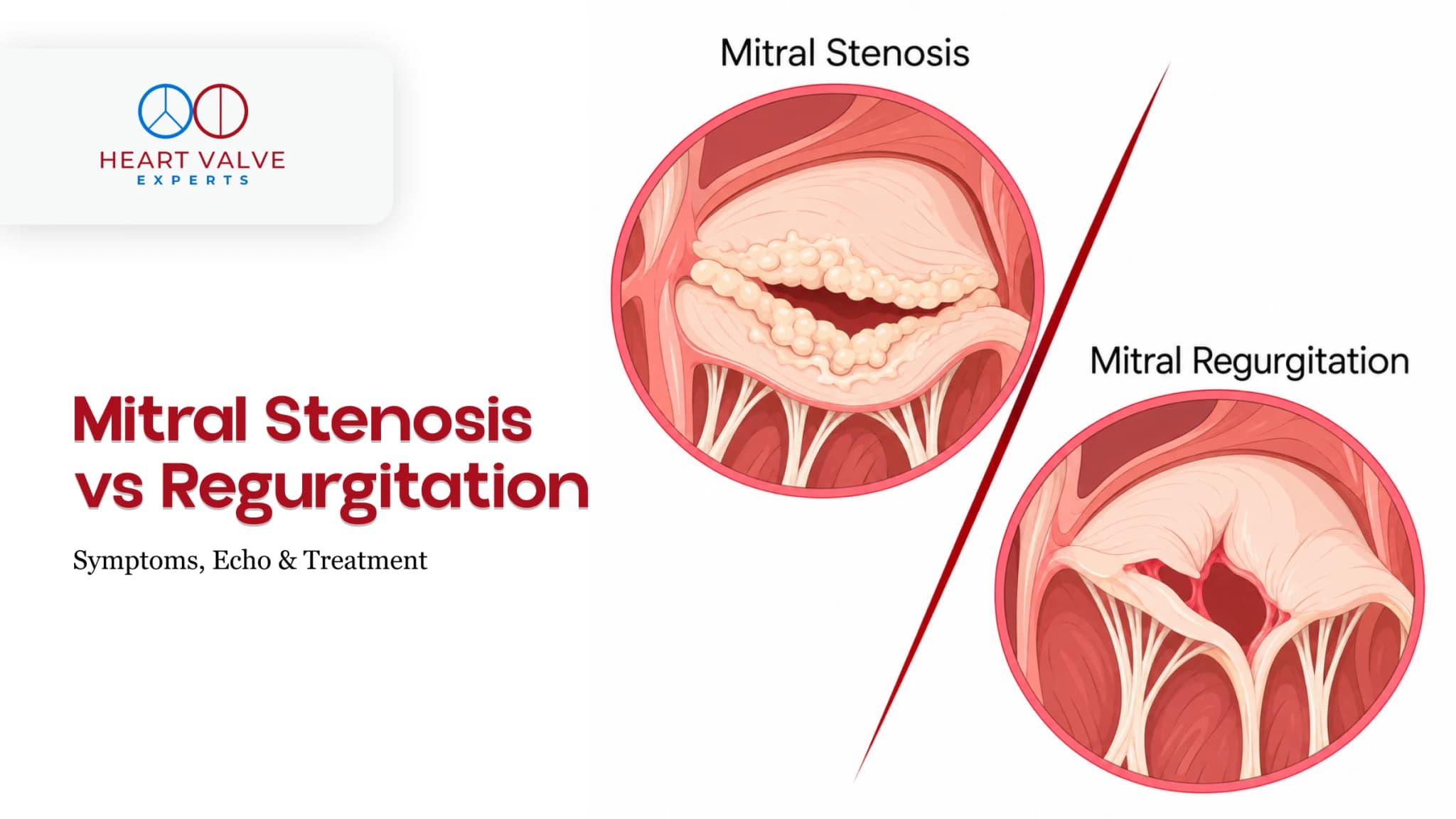
The BMV procedure is a catheter-based treatment for mitral stenosis, a condition where the mitral valve narrows and restricts blood flow through the heart, most commonly due to rheumatic heart disease.
In simple steps:
A cardiologist will consider BMV/PBMV when:
Valve suitability is assessed through an echocardiogram before the procedure.
If you have been recommended a BMV or PBMV procedure and want to understand your options better, at Heart Valve Experts, a dedicated team of experienced interventional cardiologists can help you make the right decision for your heart health.
Nobuyoshi, M. et al. (2009) ‘Percutaneous balloon mitral valvuloplasty: a review’, Circulation, 119(2), pp. E211-e219. (https://doi.org/10.1161/circulationaha.108.792952)
Fallah, N. et al. (2024) ‘Revisiting percutaneous balloon mitral valvotomy technique and safety in various populations: an evidence-based case report and literature review’, PMC, National Institutes of Health. (https://pmc.ncbi.nlm.nih.gov/articles/PMC10853446/)
Sadeghpour, A. and Kyavar, M. (2024) ‘Percutaneous mitral balloon valvuloplasty (commissurotomy, valvotomy)’, Medscape. (https://emedicine.medscape.com/article/1839677-overview)
This article is for general informational purposes only and does not constitute medical advice, diagnosis, or treatment. Always consult a qualified cardiologist or healthcare professional for guidance specific to your condition.

About The Author
With over 15 years of expertise, Dr. Phatarpekar is recognised as a renowned interventional cardiologist in Mumbai, specialising in complex coronary interventions, structural heart procedures, and pioneering work in Transcatheter Aortic Valve Implantation (TAVI).
● Blogs