Getting told you need a cardiac catheterization can be unsettling. Patients often jump to conclusions. Is this surgery? Will it hurt? Does this mean something is seriously wrong?
Here is the short answer: it is not open-heart surgery, it is rarely painful, and it is one of the most useful diagnostic tools cardiologists have. Understanding what it actually involves makes the whole experience far less intimidating.
Cardiac catheterization is a minimally invasive procedure. A thin, flexible tube called a catheter is threaded through a blood vessel, usually at the wrist or groin, and guided up to the heart. No large incisions, no general anesthesia in most cases.
At Heart Valve Experts, we provide conscious sedation during the procedure.
Once the catheter is in position, your doctor can:
It is routinely done before procedures like TAVI, balloon valvotomy, or valve replacement surgery.
An ECG or echocardiogram can tell a cardiologist a lot, but not everything. There are situations where direct pressure measurements and real-time imaging inside the heart are the only reliable way to get accurate answers.
Doctors typically recommend this test when evaluating:
Cardiac catheterization for valve disease serves a specific purpose. It gives cardiologists hard numbers such as pressure gradients, pulmonary artery pressures, and chamber volumes that imaging tests alone cannot always provide.
This matters most when the symptoms do not line up neatly with what an echocardiogram shows. In those cases, direct measurement settles the question.
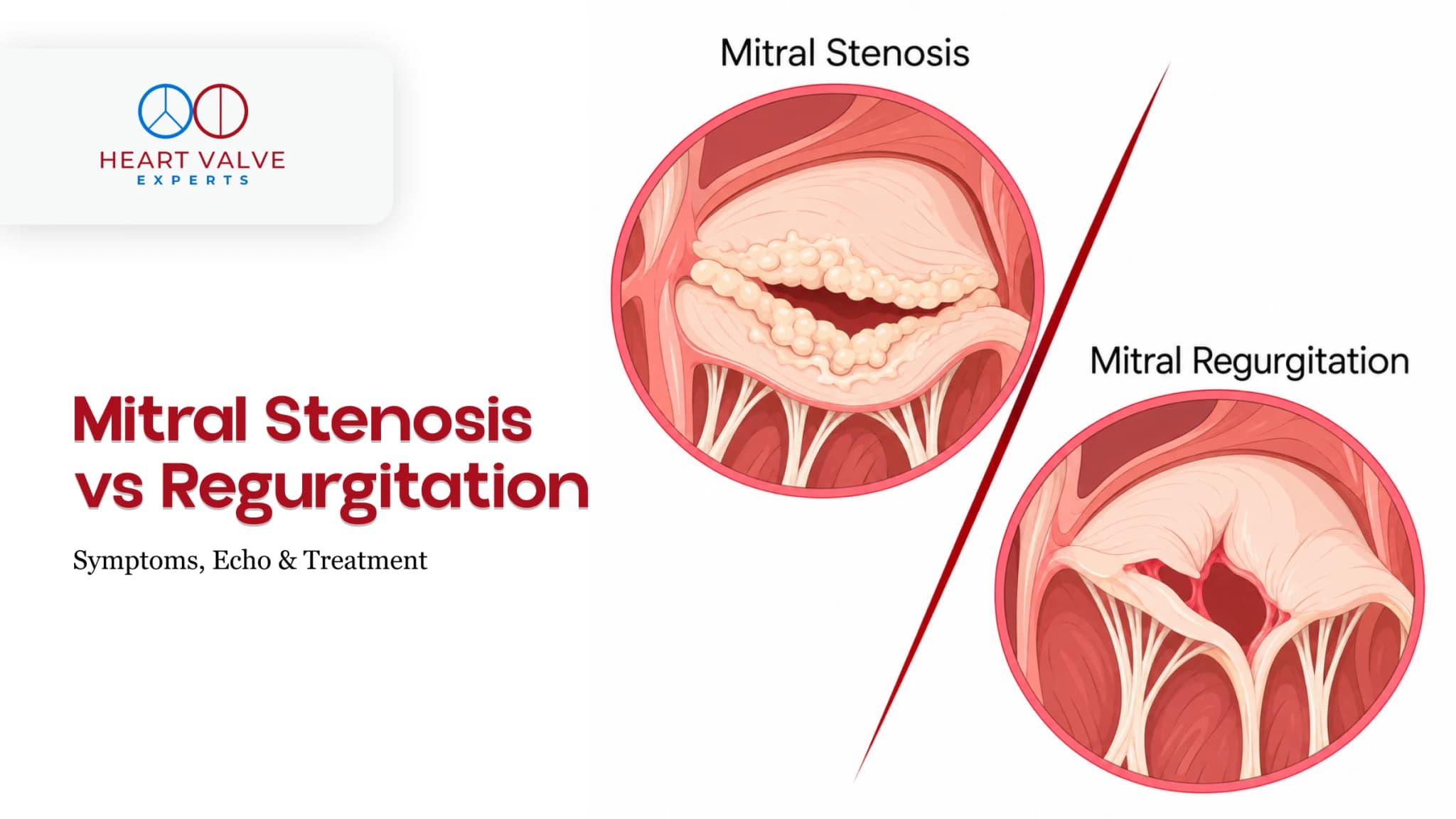
It is used across a range of valve conditions, including aortic stenosis, mitral stenosis, mitral regurgitation, tricuspid disease, and pulmonary valve problems.
Confirm the Severity of Valve Disease
Pressure measurements across the valve confirm whether the narrowing or leakage is mild, moderate, or severe. This is particularly useful when echo findings and symptoms do not fully match.
Evaluate Pulmonary Pressure
Valve problems often raise pulmonary artery pressure over time. Cardiac catheterization helps measure this accurately, which matters significantly for treatment planning.
Assess Coronary Arteries Before Valve Surgery
Before valve surgery, most adults above a certain age need their coronary arteries checked. Blockages found here can change the surgical plan considerably.
Plan Structural Heart ProceduresNewer interventions like TAVI, TMVR, and TEER frequently require catheterization data as part of the planning process.
Get your reports reviewed by Heart Valve Experts and understand the right treatment path.
Book a Cardiac EvaluationThe cardiac catheterization procedure takes place in a specialised cath lab. Beforehand, you will typically have blood tests, an ECG, and some imaging done. Fasting for several hours is standard.
On the day itself:
Most patients can walk within a few hours, particularly when the wrist approach is used.
The cost of cardiac catheterization in India varies depending on the hospital type, city, complexity of the procedure, and whether coronary angiography is included. It is best to check directly with your hospital for an accurate estimate.
Cardiac catheterization gives cardiologists information they simply cannot get any other way. For anyone dealing with valve disease, it is often the step that turns a general diagnosis into a clear treatment plan, whether that means surgery, a catheter-based intervention, or continued monitoring.
It is done to measure pressures inside the heart, assess valve function, check oxygen levels, and identify blockages in the coronary arteries.
Most patients recover within a couple of hours, though complete healing at the insertion site can take up to a few days.
A person may need it to investigate chest pain, evaluate valve disease severity, measure lung pressure, or plan a surgical or catheter-based heart procedure.
Yes, if a blockage is found during the procedure, the doctor may perform angioplasty or stent placement in the same sitting to open the artery.

About The Author
With over 15 years of expertise, Dr. Phatarpekar is recognised as a renowned interventional cardiologist in Mumbai, specialising in complex coronary interventions, structural heart procedures, and pioneering work in Transcatheter Aortic Valve Implantation (TAVI).
● Blogs