TAVI Valve Durability: What You Need to Know
Table of Contents
- What Is TAVI and Why Is It Used?
- How Long Does a TAVI Valve Last?
- What Affects the Lifespan of a TAVI Valve?
- Benefits of TAVI Beyond Durability
- TAVI vs Surgical Valve Replacement: Which Lasts Longer?
- Who Should Consider TAVI?
- How to Improve the Longevity of Your TAVI Valve?
- Why Choose Heart Valve Experts for TAVI?
- Frequently Asked Questions

Medically Reviewed By
Dr. Ankur U. Phatarpekar
Get A Call Back
No open-chest surgery. Faster recovery. Back to life within days.
TAVI sounds like the answer and for most patients, it genuinely is.
But before the relief sets in, one question tends to surface.
“How long will the new valve actually last?”
It is the most important question you can ask. Here is the honest answer.
What Is TAVI and Why Is It Used?
TAVI stands for transcatheter aortic valve implantation.
In simple terms, a damaged aortic valve is replaced without opening the chest.
A thin, flexible tube is inserted through a small incision near the groin. The new valve travels through this tube. It sits inside the existing damaged valve and immediately starts working.
- No large incision
- No cracked sternum
- No stopping the heart
TAVI was originally developed for patients who were at very high risk for open-heart surgery. Today it is used across a much broader range of patients because the evidence for its safety and effectiveness is strong.
How Long Does a TAVI Valve Last?
TAVI valves are designed to be durable and, in most cases, continue to function well for at least 8 to 10 years. Over this period, the majority of patients experience stable valve performance with low rates of deterioration or failure.
Many patients also maintain adequate valve function for around five years or longer, with consistent improvements in symptoms and quality of life. As technology continues to evolve, newer valve designs are expected to further enhance long-term performance.
For example, long-term studies with 10-year follow-up have demonstrated very low rates of valve failure and structural valve degeneration, with 91% of patients remaining free from structural valve degeneration between 5 and 10 years post-implantation.
What Affects the Lifespan of a TAVI Valve?
Several factors influence how long a TAVI valve performs well.
Age of the patient: Older patients benefit for longer in relative terms. The valve may simply outlast its natural lifespan. Younger patients may need to plan for a future intervention.
Overall health: Conditions like diabetes, kidney disease, and high blood pressure can affect valve performance over time. Managing these conditions well supports long-term valve health.
Lifestyle habits
- A balanced, heart-healthy diet
- Regular gentle exercise
- Not smoking
- Maintaining a healthy weight
These are not just good for the heart. They directly support the valve too.
A valve placed with precision by an experienced team performs better and lasts longer.
At Heart Valve Experts, our team has performed some of the highest volumes of TAVI procedures in Mumbai. Learn more about TAVI in Mumbai.
Benefits of TAVI Beyond Durability
Durability is important. But it is one part of a larger picture.
For most patients, particularly older adults, the benefits of TAVI extend well beyond how long the valve lasts.
- No large chest wound
- Most patients walking within 24 hours
- Home within a few days
- Lower risk of atrial fibrillation and major bleeding compared to open surgery
- Meaningful improvement in breathlessness, energy, and daily function
TAVI vs Surgical Valve Replacement: Which Lasts Longer?
When evaluating treatment pathways, it’s important to consider what the right choice is between TAVI and SAVR based on individual patient factors. Surgical tissue valves have long been considered the standard for durability, typically lasting around 10 to 15 years. However, TAVI valves are rapidly closing this gap.
Comparative studies have shown that, at mid-term follow-up of over 5–6 years, the rates of significant structural valve deterioration are similar between TAVI and surgical valve replacement. With continuous advancements in valve design and technology, the durability of TAVI is expected to improve even further.
For many older patients, TAVI offers outcomes that are comparable to surgical replacement, with the added advantage of being a less invasive procedure that avoids the physical demands of open-heart surgery.
Who Should Consider TAVI?
TAVI may be appropriate for:
- Patients with severe aortic stenosis causing symptoms
- Patients at intermediate or high surgical risk
- Elderly patients seeking a faster, less invasive option
- Patients not suitable for open-heart surgery
It may not be the first choice for every younger patient where long-term durability considerations weigh more heavily.
How to Improve the Longevity of Your TAVI Valve?
Patients play an active role in protecting their valve after the procedure.
- Attend all scheduled follow-up appointments and echocardiograms.
- Take prescribed medications exactly as directed.
- Manage blood pressure and cholesterol through diet and medication.
- Stay physically active within your cardiologist’s recommended limits.
- Inform all treating doctors and dentists that you have had a valve procedure.
Early detection of any valve changes through regular imaging allows timely intervention and the best possible outcomes.
Why Choose Heart Valve Experts for TAVI?
Choosing the right team is just as important as choosing the right procedure.
At Heart Valve Experts in Mumbai, patients benefit from:
- One of the highest volumes of TAVI procedures in Mumbai
- An experienced multidisciplinary team with decades of expertise
- Advanced 3D imaging and next-generation valve technology
- Comprehensive pre-procedure assessment and long-term follow-up care
- A team that considers not just the valve but the patient’s entire cardiac future
The experience of the treating team directly affects how well the valve performs and how long it lasts.
Conclusion
The durability of TAVI valves has improved dramatically over the past decade.
Current evidence supports excellent valve function for at least 8 to 10 years in the majority of patients. Severe deterioration within this period is uncommon. And if further intervention is ever needed, the valve-in-valve option makes that process far less daunting than most people expect.
For most patients, particularly older adults, TAVI offers a safe, effective, and durable solution to aortic valve disease.
The most important step is getting the right assessment from the right team.
If you or a loved one is considering TAVI, our team at Heart Valve Experts is here to give you a clear, honest answer. Book your consultation today.
Frequently Asked Questions
A TAVI valve typically lasts 8 to 10 years or more, based on current clinical data. Ongoing studies suggest that durability may extend beyond this in many patients.
The lifespan depends on the type of valve: Bioprosthetic (tissue) valves: Usually last for 10 to 15 years, but mechanical valves can last 20 years or more but require lifelong blood thinners. Your doctor will recommend the most suitable option based on your age and health condition.
Yes, if a TAVI valve deteriorates, it can often be treated with a valve-in-valve procedure, where a new valve is placed inside the existing one, avoiding open-heart surgery in many cases.

About The Author
Dr. Ankur U. Phatarpekar M.D., D.M., FSCAI
With over 15 years of expertise, Dr. Phatarpekar is recognised as a renowned interventional cardiologist in Mumbai, specialising in complex coronary interventions, structural heart procedures, and pioneering work in Transcatheter Aortic Valve Implantation (TAVI).
● Blog
Related Heart Valve Experts (HVE) Blog
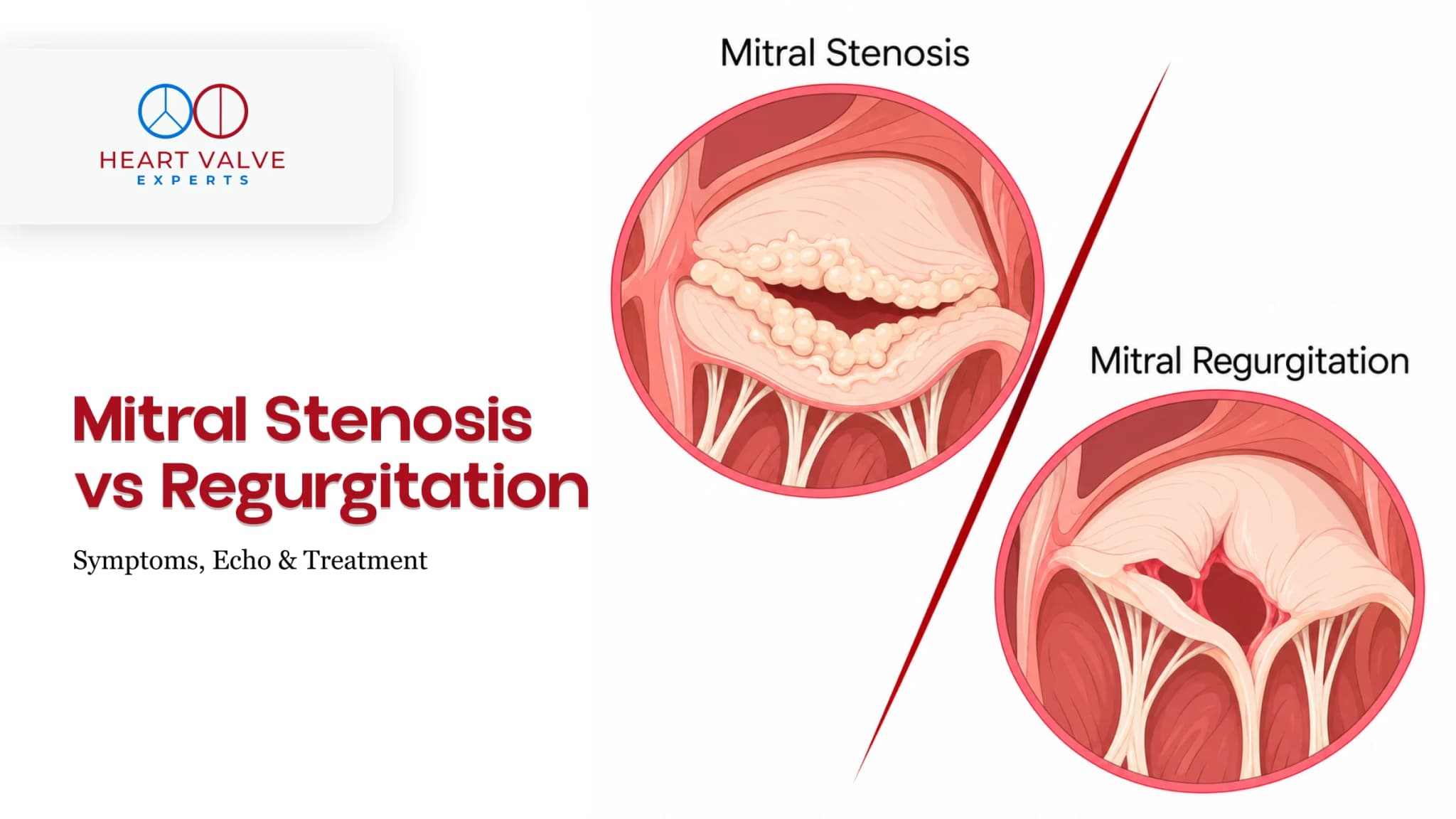
Mitral Stenosis vs Mitral Regurgitation: Differences in Symptoms, Echo Findings and Treatment

Aortic Stenosis Echo Criteria Explained: Understanding Your Echo Before a TAVI Assessment

How to Get a Medical Second Opinion for Heart Valve Treatment Before Travelling to India
Medical Visa for India: Requirements and Application Guide for Heart Patients

Heart Valve Surgery in Mumbai: How to Choose a Hospital and When to Seek a Second Opinion