You’re not alone! Many people think about heart valve treatments before they even consider the diagnosis.
“Is there another way?”
“Am I too old for open heart surgery?”
“Do they still have to open the chest for this?”
These are a few of the many questions that naturally arise when you or a loved one are considering heart valve treatment options.
The fear isn’t the diagnosis, but the image of a major surgery, long recovery, and uncertainty of it all.
The good news?
Heart valve treatment today is very different from what it was 20 years ago.
Heart valve treatments have changed significantly, and for many patients, modern options now exist that don’t require opening up the chest.
Understanding those options, and whether they apply to you, starts with knowing how and why treatments have evolved.
Ever wondered why some heart valve problems used to require major surgery and how treatment options have changed today? Let’s take a closer look.
Heart valves are meant to keep blood moving in the right direction.
Over time, they can:
The heart starts compensating very early on.
Symptoms creep in gradually: breathlessness, fatigue, and reduced stamina are often dismissed as ageing or stress.
In older patients, those with multiple medical conditions, or those with fragile heart muscles, often face higher surgical risks.
Improvements in imaging, catheter technology, and valve design have made it possible to:
These advances are the reason heart valve surgery without opening the chest is now a real option for many, though not all, patients.
Yes, in selected patients, heart valve replacement or repair can be done without open heart surgery.
These procedures are typically performed using catheter-based techniques. Instead of opening the chest, doctors guide instruments to the heart through blood vessels and small incisions.
However, this doesn’t mean everyone qualifies.
The right approach depends on:
This distinction matters. This is why proper evaluation is essential.
He delayed seeing a specialist for months, not because symptoms were mild, but because he assumed open heart surgery was his only option.
The patient had started walking shorter distances. Stairs felt harder than before. By evening, fatigue set in earlier, but daily life was still manageable, so he put off getting checked.
What held him back wasn’t denial. It was fear. Fear of open heart surgery, long recovery, and possible complications.
When he eventually underwent evaluation, significant valve disease was identified. Open heart surgery was considered, but age, overall health, and heart function increased surgical risk. Catheter-based options were discussed as a safer, more appropriate alternative for his anatomy and condition.
Recovery wasn’t instant. Medications were adjusted, follow-ups were scheduled, and symptoms improved gradually over time. The condition was serious but this approach was more suitable for the patient.
Many patients delay care out of fear. Early assessment helps guide you safely toward the right treatments, surgery or minimally invasive options.
The key takeaway?
Choosing a less invasive approach didn’t minimise the condition; it reflected what was safest and most appropriate for the patient.
Outcomes vary, and careful follow-up remains critical.
If you’re experiencing breathlessness, fatigue, or swelling, a specialist evaluation can clarify whether symptoms are from valve disease or another heart issue.
Today, several less invasive options exist, depending on the valve and condition.
This approach allows doctors to replace a damaged valve using a catheter.
This method is commonly used for aortic valve disease and is expanding to other valves in selected cases.
In some patients, repairing the existing valve is possible.
This procedure:
Whether repair or replacement is better depends on valve anatomy and disease severity.
Some patients benefit from minimally invasive surgical techniques.
These are still surgeries, just performed in a less invasive way.
Not all valves are treated the same way.
For many people with aortic stenosis, valve replacement can now be performed using catheter-based techniques. These procedures allow doctors to replace the valve without opening the chest, offering a less invasive option for selected patients based on anatomy, health status, and overall risk.
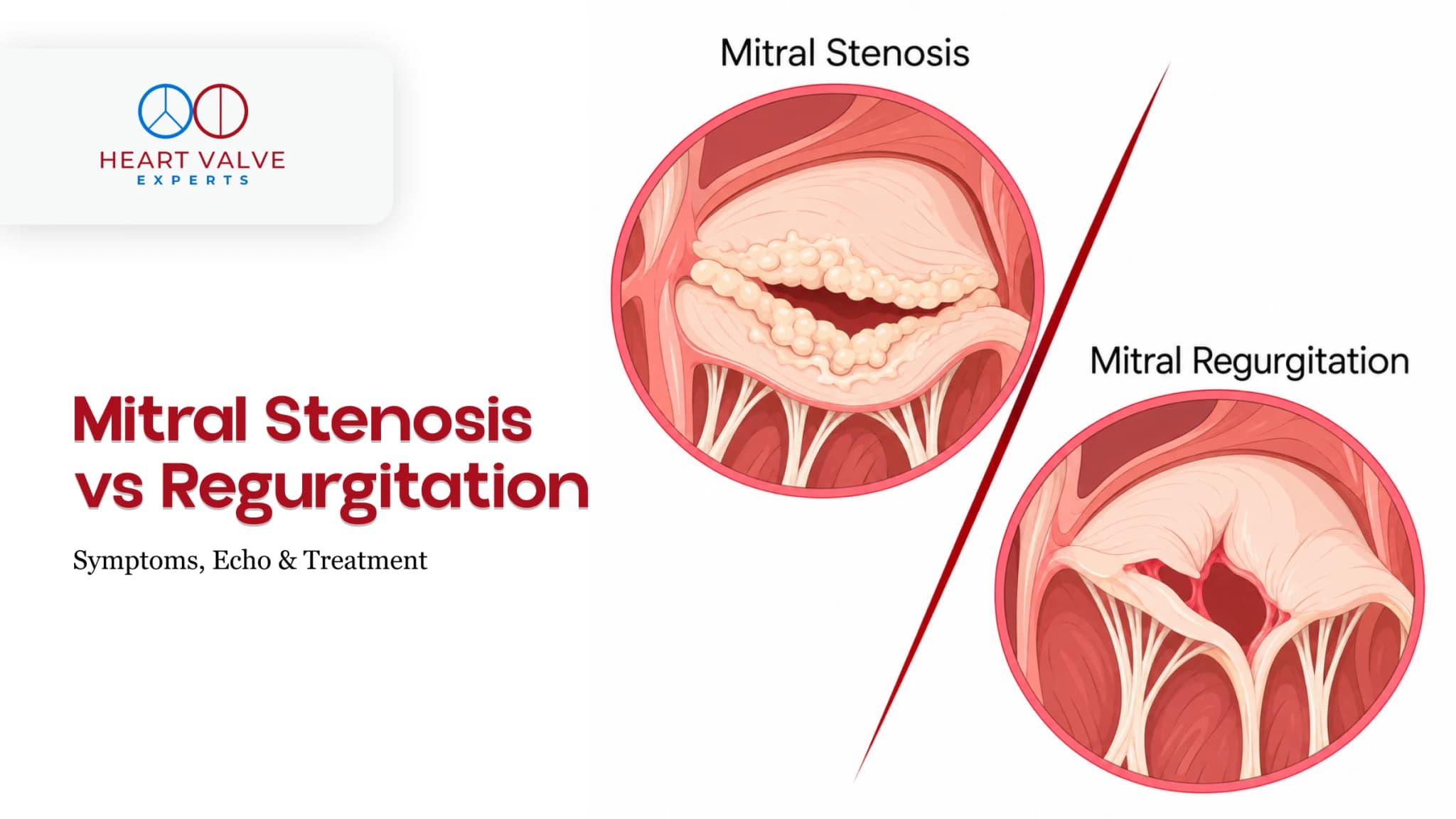
Mitral valve disease is often more complex and requires careful evaluation. While catheter-based repair is commonly used, valve replacement without open heart surgery may be possible in selective cases. The right approach depends on valve structure, severity of disease, and long-term safety considerations.
Treatment options for the tricuspid and pulmonary valves are evolving.
In some patients, catheter-based approaches may be considered, though suitability depends on the patient’s anatomy, symptoms, and available expertise.
Modern valve treatments, like TAVR/TAVI or catheter-based repair, can reduce trauma and recovery time. A specialist can determine what’s safest for your heart.
Understanding Eligibility for Valve Replacement Without Open Heart Surgery
Eligibility isn’t about age alone; it’s about anatomy, safety, and long-term outcomes.
In the right patients, these treatments can offer safe and effective results.
Success depends on:
This is not about avoiding surgery at all costs but about choosing the safest, most suitable option.
Symptoms can come from:
At Heart Valve Experts, the focus is on identifying what’s truly driving symptoms. Multidisciplinary assessments help ensure that treatment decisions are based on clarity, not assumptions.
The goal isn’t to push a procedure but to guide patients toward the safest, most appropriate path forward.
If you’re experiencing:
If you’re worried that open heart surgery is your only option; a specialist evaluation can help clarify what’s possible.
Knowing your options early on, helps you feel more prepared and less anxious.
Heart Valve Experts (HVE) can guide you through evaluation and help identify the safest, most effective approach.
In some cases, more than one valve may be treated, but this depends on complexity and patient stability.
Durability varies by valve type and procedure. Long-term follow-up is essential.
Most patients experience shorter hospital stays and faster recovery, though this differs from person to person.
Yes, in selected patients, heart valve replacement can be done using catheter-based techniques without opening the chest. Eligibility depends on the valve involved and overall health.
It refers to catheter-based procedures that improve valve function without opening the chest. These are suitable only for certain valve conditions.
Yes, but only in carefully selected patients. Not all mitral valve problems are suitable for non-surgical replacement.
When performed in appropriate patients by experienced teams, these procedures are considered safe and effective.

About The Author
With over 15 years of expertise, Dr. Phatarpekar is recognised as a renowned interventional cardiologist in Mumbai, specialising in complex coronary interventions, structural heart procedures, and pioneering work in Transcatheter Aortic Valve Implantation (TAVI).
● Blogs