
Mild Mitral Regurgitation on an Echo: When and How Should It Be Checked?

When your echocardiogram report mentions mild mitral regurgitation, it is natural to feel a little uneasy. The good news is that mild mitral regurgitation is one of the most common findings on an echo, and in most cases it is not a cause for alarm.
This article walks you through what the finding means, whether it is dangerous, what symptoms to watch for, and when it is time to see a cardiologist.
What Is Mitral Regurgitation?
Mitral regurgitation is a heart valve problem in which the mitral valve, located between the upper left chamber (left atrium) and the lower left chamber (left ventricle), does not close properly. As a result, some of the blood leaks backward into the upper chamber every time the heart pumps, instead of moving forward to the rest of the body.
The amount of leakage can vary. In some people, it is so mild that it causes no problems, while in others, a large amount of blood flows backward with each heartbeat, making the heart work harder.
Mitral regurgitation can happen for several reasons, including:
- Age-related wear and tear
- Mitral valve prolapse
- Past infections or rheumatic disease.
- Changes in the heart’s shape and size due to other cardiac conditions
Severity is what determines how much attention it needs, which is why the grading on your echo report matters so much.
What Does Mild Mitral Regurgitation Mean on an Echo?
Mitral regurgitation occurs when this valve does not close properly. As a result, a small amount of blood leaks backward into the left atrium every time the heart beats instead of moving forward to the rest of the body.
Doctors use an echocardiogram (echo) to measure how much blood is leaking backward. Based on the findings, mitral regurgitation is usually classified as:
- Mild: Only a small amount of blood leaks backward.
- Moderate: A larger amount of blood leaks, requiring closer monitoring.
- Severe: A significant amount of blood leaks, and treatment may be needed.
Mild mitral regurgitation is the least severe form. In many cases, it is discovered by chance during a routine echocardiogram performed as part of a health check-up or before surgery. It often does not cause symptoms or interfere with normal heart function.
Symptoms of Mild Mitral Regurgitation Be Aware Of
Most people with mild mitral regurgitation have no symptoms at all. When mild MR symptoms do appear, they tend to be subtle and easy to dismiss, such as:
- Mild fatigue during exertion
- Occasional palpitations or a fluttering sensation
- Slight breathlessness on climbing stairs or exercising
If these symptoms are new, worsening, or accompanied by chest discomfort, swelling in the legs, or breathlessness at rest, they warrant prompt evaluation regardless of what the echo grade says.
When Is Monitoring Sufficient?
For most people with mild MR, no symptoms, and a structurally normal heart, monitoring is enough. This usually means:
- A follow-up echo every one to three years, with the exact interval set by your cardiologist based on your specific findings
- Keeping track of any new symptoms between visits
- Managing general cardiovascular risk factors like blood pressure and cholesterol
Mild regurgitation in a healthy heart rarely needs medication or intervention. Regular monitoring simply ensures that any change is caught early.
When Are More Tests Required?
Further testing is usually considered when the echo shows something beyond isolated mild regurgitation, such as:
- Signs of valve prolapse or degeneration
- Enlargement of the left atrium or ventricle
- New or worsening symptoms
- A jump in severity compared to a previous echo
In these situations, your cardiologist may recommend a more detailed echo, a stress test, or occasionally a cardiac MRI to get a fuller picture of valve and heart function.
When Is Mild Mitral Regurgitation Treatment Considered?
Mild mitral regurgitation treatment is generally not required. Regurgitation at this stage does not typically warrant medication or surgery. Treatment becomes relevant only if:
- The regurgitation progresses to moderate or severe
- Symptoms develop that affect daily activities
- Heart chamber enlargement or reduced heart function is detected on follow-up scans
At that stage, management can range from medication to control blood pressure and heart workload, to valve repair or replacement in more advanced cases. For mild, stable, and asymptomatic MR, the goal is simply to watch and wait with appropriate follow-up.
Not sure what your echo report means?
Schedule a consultation with our team of cardiologists, at Heart Valve Experts for a comprehensive valve assessment and personalised care.
Frequently Asked Questions
Diagnosis usually starts with a physical exam, where a doctor listens for a characteristic whooshing murmur through a stethoscope. This is then confirmed and graded with an echocardiogram, which uses colour Doppler imaging to show the backward flow of blood across the valve.
The cardiologist assesses the size and speed of the regurgitant jet, the size of the left atrium and ventricle, valve structure and motion, and overall pumping function, then combines these to arrive at a severity grade.
In a structurally healthy heart, mild or trace regurgitation is frequently considered a normal variant rather than a disease, especially in older adults.
It may or may not be consistently detected, since grading can vary slightly between scans and machines. This is another reason why trends over multiple echoes matter more than a single report.
Usually not. Most people with mild mitral regurgitation have no symptoms and only need regular monitoring.
Yes. It is a common finding on echocardiograms, especially in older adults, and is often discovered during routine heart scans.
Yes. It can progress over time in some people, which is why regular follow-up and echocardiograms are important.
Usually not. Most people with mild mitral regurgitation have no symptoms and only need regular monitoring.
Is mild mitral regurgitation common?
Yes. It is a common finding on echocardiograms, especially in older adults, and is often discovered during routine heart scans.
Can mild mitral regurgitation get worse?
Yes. It can progress over time in some people, which is why regular follow-up and echocardiograms are important.

About The Author
Dr. Ankur U. Phatarpekar M.D., D.M., FSCAI
With over 15 years of expertise, Dr. Phatarpekar is recognised as a renowned interventional cardiologist in Mumbai, specialising in complex coronary interventions, structural heart procedures, and pioneering work in Transcatheter Aortic Valve Implantation (TAVI).
● Blog
Related Heart Valve Experts (HVE) Blog
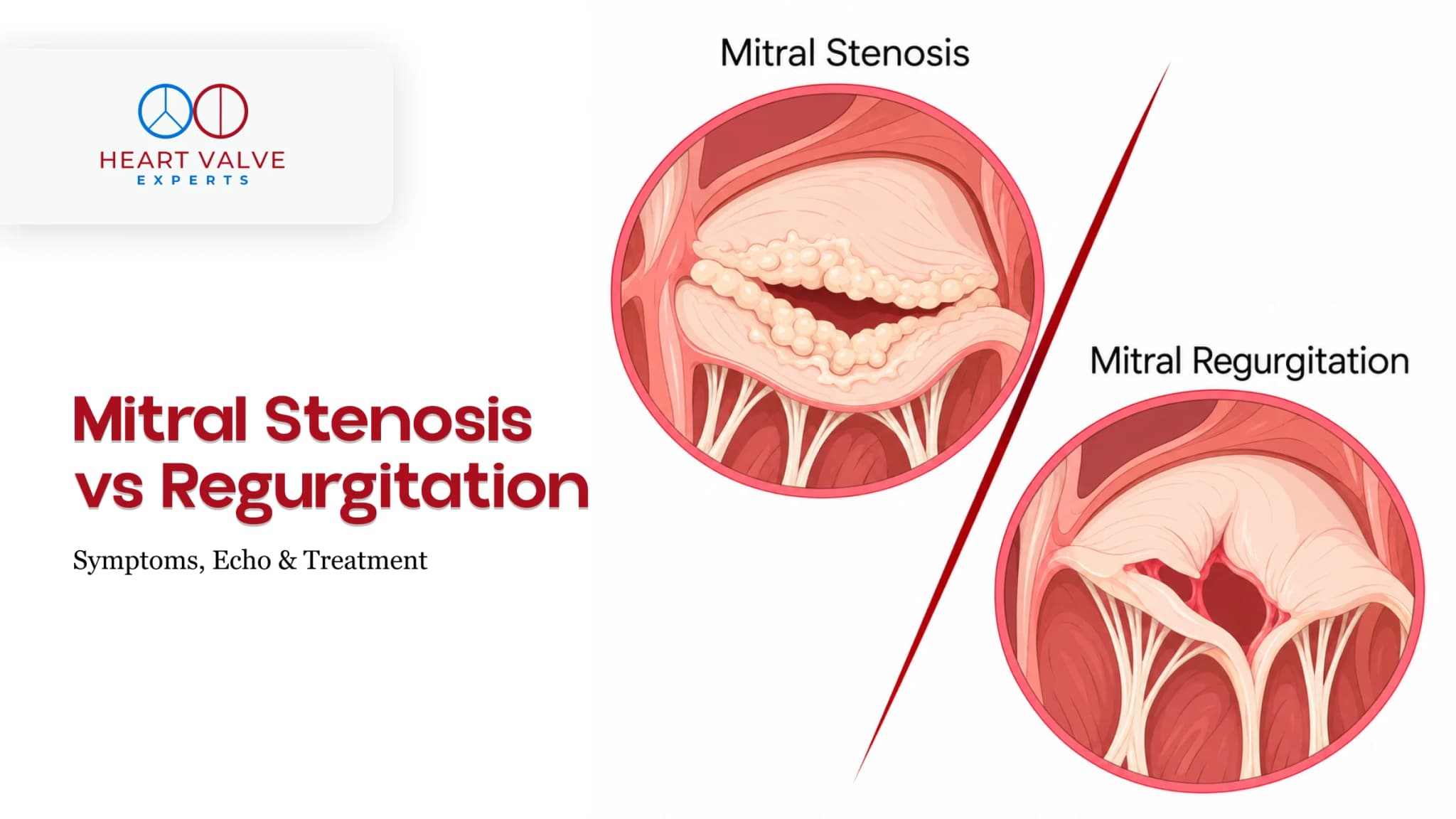
Mitral Stenosis vs Mitral Regurgitation: Differences in Symptoms, Echo Findings and Treatment

Aortic Stenosis Echo Criteria Explained: Understanding Your Echo Before a TAVI Assessment

How to Get a Medical Second Opinion for Heart Valve Treatment Before Travelling to India

Medical Visa for India: Requirements and Application Guide for Heart Patients

Heart Valve Surgery in Mumbai: How to Choose a Hospital and When to Seek a Second Opinion