At first, it’s subtle.
You pause halfway up the stairs.
Walking at your usual pace feels harder than it used to.
Lying down at night makes your breathing feel relatively uncomfortable.
You often find yourself explaining it away as stress, age or poor fitness.
But over time, your heart starts sending clearer signals:
Breathlessness arrives sooner.
Fatigue lingers longer.
Palpitations catch you off guard.
If breathlessness or fatigue is slowly changing your routine, it may be worth understanding what’s driving it.
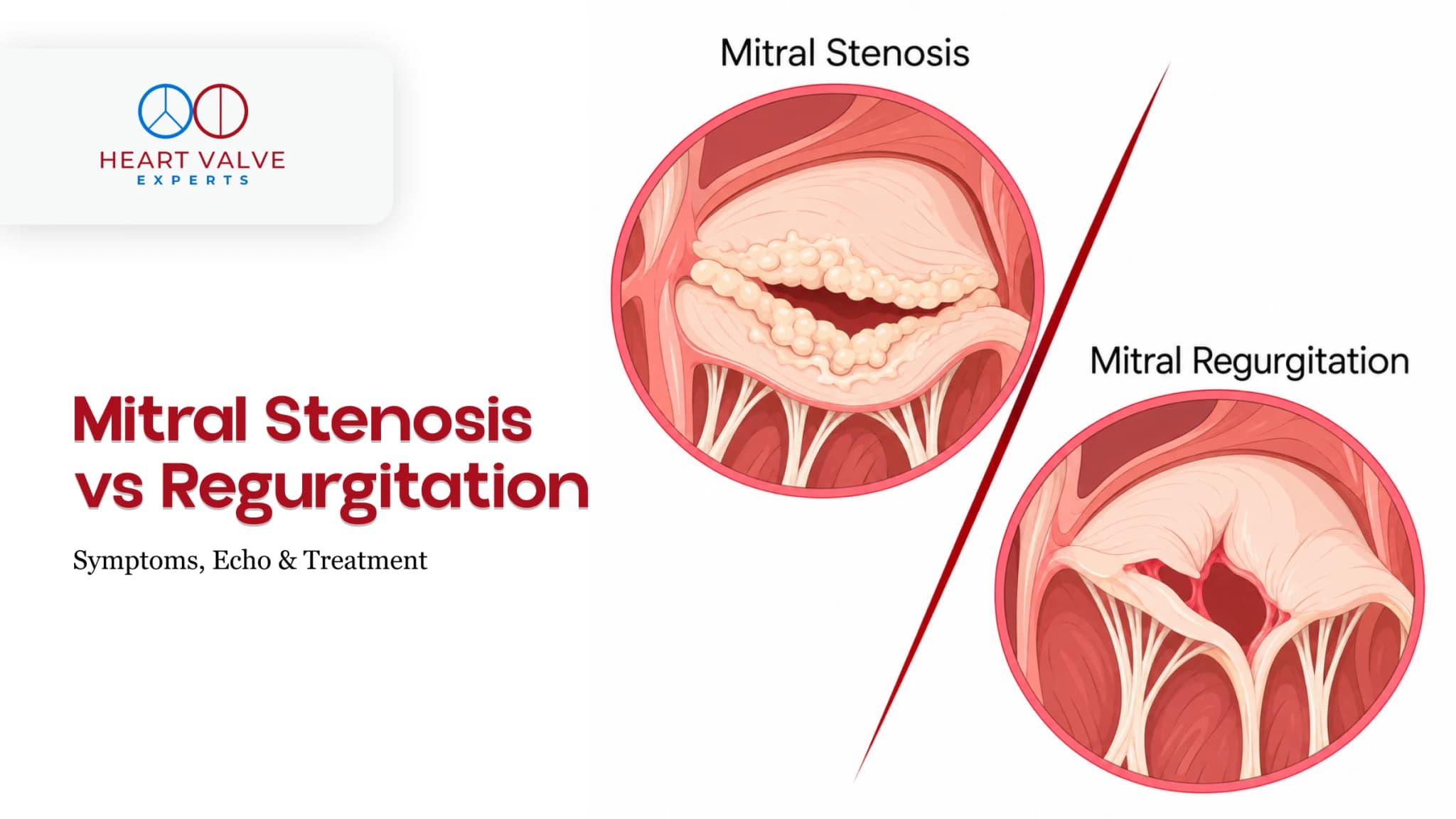
At some point, your doctor may start mentioning unfamiliar words during visits, like “mitral valve narrowing” or “mitral stenosis.”
This is often the point where the discussion shifts from monitoring symptoms to figuring out the available treatment options.
Understanding your diagnosis and treatment options helps turn fear into clarity.
The mitral valve acts like a door between two chambers of the heart.This is a one-way door that opens between the upper and lower chambers of the left side of the heart.
Its main function is to open with each heartbeat and let the blood move forward. As soon as this happens, it closes, preventing the backflow of blood.
Knowing what’s happening inside your heart often helps you feel more in control of the next steps.
This narrowing is often progressive and doesn’t happen overnight.
When the valve opening is smaller than normal, the blood moves forward with difficulty, causing pressure to build up behind the valve.
Common symptoms include:
Many patients adjust their routines long before seeking care.
Percutaneous Mitral Balloon Valvuloplasty, commonly called PBMV, is a minimally invasive procedure used to treat mitral stenosis, a condition where the mitral valve becomes abnormally narrow.
Instead of opening the chest or replacing the valve, PBMV works by gently widening the existing valve using a balloon, allowing blood to flow more easily through the heart.
PBMV aims to relieve this obstruction without replacing the valve.
It is performed through blood vessels and not open heart surgery.
PBMV stands for:
Not every valve problem requires surgery. Some conditions can be treated by working with the valve you already have.
Symptoms That May Prompt Evaluation for PBMV
1. Breathlessness during activities
2. Fatigue and difficulties in exercising
3. Heart palpitations
4. Fluid retention or swelling in the lower limbs
These symptoms don’t immediately mean that you’re a candidate for this procedure but they do mean that an evaluation is required.
A 63 year-old patient walked in, not alarmed but just tired.
Shorter walks. Slower stairs. Fatigue that crept in before the day was done. Life went on, routines stayed intact but the body was quietly asking for attention.
What delayed care wasn’t denial. It was uncertainty.
Testing eventually revealed significant mitral valve narrowing. The valve opening was restricted enough to explain the symptoms, yet the valve structure was suitable for balloon treatment.
PBMV was discussed not as an easy option, but as the most appropriate one.
Recovery wasn’t instant. Medications were adjusted. Follow-ups were planned. Over time, breathing improved, and daily activities became easier again.
The condition was serious. The treatment was simply matched to the patient.
Understanding what to expect can ease much of the anxiety around procedures like PBMV.
Understanding the steps often helps ease anxiety.
Before the procedure, patients typically undergo:
These steps help confirm PBMV is safe and suitable.
The balloon separates fused valve leaflets, improving blood flow without removing the valve.
Most patients are monitored closely for a short period and discharged once stable.
Many patients experience:
Improvement is often gradual, not instant, and that’s a normal part of recovery.
PBMV is most effective when:
PBMV is not suitable for all forms of mitral valve stenosis. Some patients may eventually need surgical repair or replacement.
If you’ve been experiencing any of the following symptoms, seek urgent care:
1. Monitoring Symptoms at Home
Daily awareness of breathing, activity tolerance, and swelling matters.
2. Diet and activities that support heart health
Balanced nutrition, appropriate activity, and fluid management support long-term outcomes.
3. Regular follow-ups with your doctor
Mitral stenosis symptoms don’t all come from the valve alone. Sometimes heart muscle function, rhythm issues, or lung pressures also play a role.
At Heart Valve Experts, evaluations focus on identifying what is truly driving symptoms before recommending any procedure. This clarity ensures that PBMV is chosen only when it offers the safest and most meaningful benefit.
Percutaneous Balloon Mitral Valvuloplasty.
Usually a few hours, including preparation and monitoring.
Discomfort is minimal and managed with medication.
Some improvement may be felt early, with gradual gains over weeks.
Risks exist but are reduced with careful patient selection.
By completing recommended tests and discussing medications and expectations with their care team.
Heart Valve Experts focuses on guiding patients through their options by identifying what’s truly causing their symptoms. Through detailed evaluation and team-based review, patients are guided toward the safest and most appropriate treatment, whether that involves PBMV, another procedure, or continued medical care.

About The Author
With over 15 years of expertise, Dr. Phatarpekar is recognised as a renowned interventional cardiologist in Mumbai, specialising in complex coronary interventions, structural heart procedures, and pioneering work in Transcatheter Aortic Valve Implantation (TAVI).
● Blogs