Your heart has four valves.
Think of them as doors inside your heart opening to let blood through and closing to stop it flowing back the wrong way.
When one of these doors stops working properly, your whole body feels it. You feel breathless. Tired. Like something is not quite right.
The mitral valve is the most commonly affected of these four doors. And for many patients who need it replaced, a procedure called Transcatheter Mitral Valve Replacement is now making that possible without open-heart surgery.
TMVR stands for Transcatheter Mitral Valve Replacement.
In simple terms, it is a way of replacing a damaged mitral valve using a thin, flexible tube called a catheter, inserted most commonly through a small incision near the groin.
The old valve is not removed. Instead, a new valve is delivered through the tube, placed inside the existing damaged valve, and expanded into position. It immediately starts doing the job the old valve could no longer do.
No large wound. No cracked chest. No stopping the heart.
TMVR is used when the mitral valve is either leaking, allowing blood to flow in the wrong direction, or too narrow, making it difficult for blood to pass through properly. Both problems make the heart work much harder than it should.
A thin tube is guided through a vein in the groin all the way to the heart. The new valve travels through this tube, is positioned carefully, and clicks into place. The heart keeps beating throughout.
The entire procedure is guided by live imaging, an ultrasound probe, and X-ray technology, so the team can see exactly what is happening inside the heart at every moment.
TMVR is mainly for patients with severe mitral valve disease who cannot safely have open-heart surgery older patients, those with other health conditions like diabetes or kidney disease, or those whose previous valve repair has stopped working.
Like any cardiac procedure, TMVR carries some risks, including minor bleeding, a small risk of infection, and, in rare cases, the valve moving slightly out of position. A thorough assessment before the procedure helps identify and reduce these risks significantly.
Most patients go home within one to two days. Many return to light daily activity within one to two weeks compared to two to three months of recovery after open-heart surgery.
TMVR is performed at Heart Valve Experts, Mumbai, one of India’s leading centres for structural heart and valve care.
The mitral valve sits between the two chambers on the left side of the heart.
Every time the heart beats, it opens to let blood flow through, then closes tightly to stop it flowing back.
When it stops working properly, one of two things usually happens:
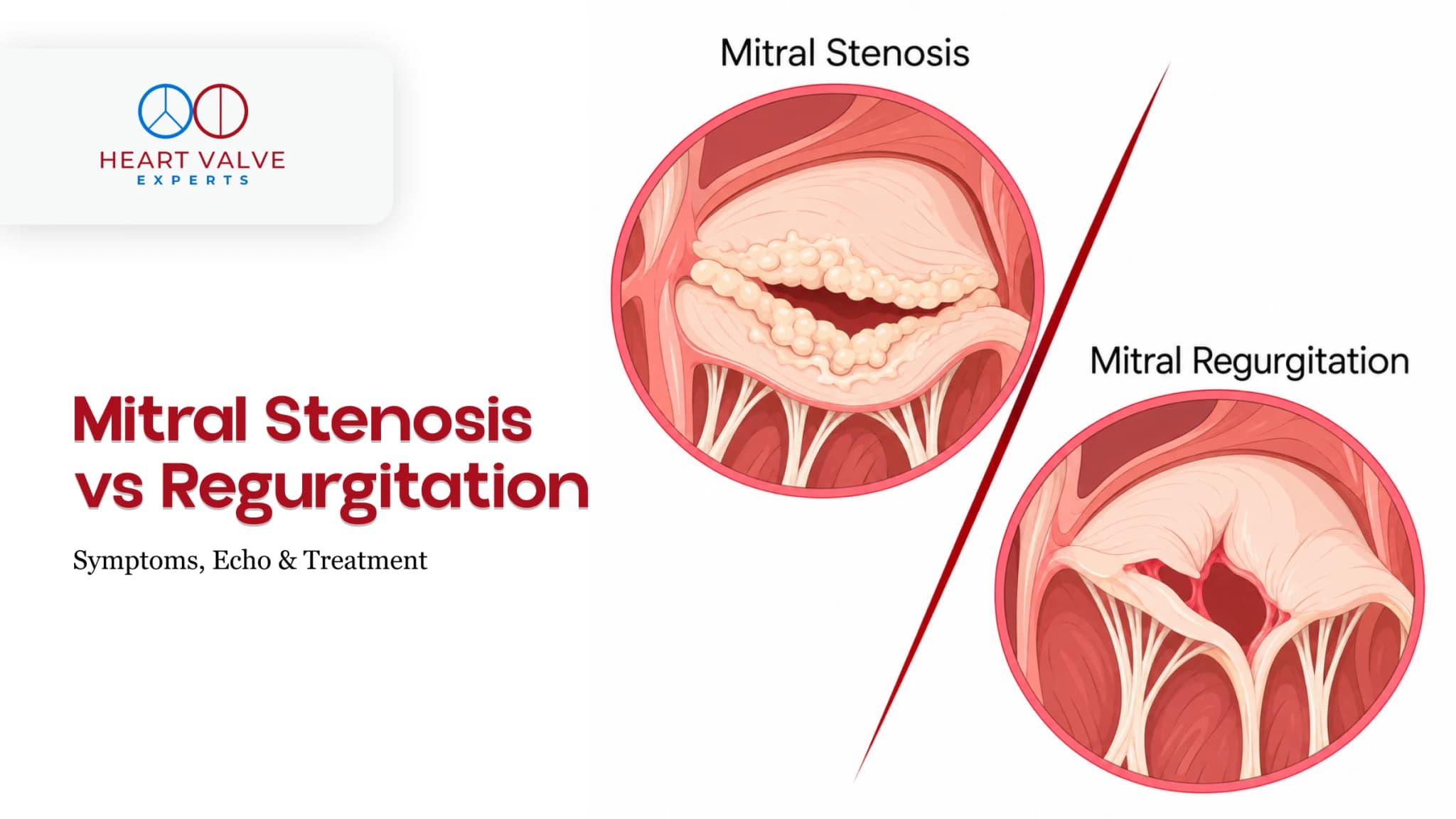
Blood flows backwards instead of forwards. The heart has to pump harder to compensate. Over time this problem wears the heart out. This condition is called mitral regurgitation and it is one of the most common heart valve conditions in the world.
The valve becomes too narrow
Blood struggles to pass through. This condition puts pressure on the heart and lungs. This is called mitral stenosis and is particularly common in India due to a condition called rheumatic heart disease, which can damage the valve years after a throat infection in childhood.
Both conditions, when left untreated, lead to breathlessness, extreme fatigue, swollen legs, and eventually heart failure.
TMVR is not for everyone.
It is primarily recommended for patients who genuinely need their mitral valve replaced but whose health makes open-heart surgery too risky.
This includes:
If the valve can still be repaired rather than replaced, surgical repair remains the preferred first choice where possible. Your cardiologist will assess which option is right for your specific situation.
There are two ways the new valve can be delivered to the heart.
Through the groin: the most common approach
A small incision is made near the groin. A thin tube is guided through a large vein all the way up to the heart. The cardiologist makes a tiny, precise opening in the wall between the upper chambers of the heart to reach the mitral valve from the correct side. The new valve is then delivered, positioned, and expanded into place.
The whole time, the team watches a live picture of the heart on a screen using ultrasound and X-ray imaging. Nothing is done blindly.
Through a small chest incision: used when the groin route is not suitable
In some patients, the groin route is not appropriate. In these cases, the cardiologist makes a very small incision on the chest wall to reach the tip of the heart directly and delivers the valve from there.
For the right patient, the advantages over open-heart surgery are significant:
TMVR is a technically complex procedure, which makes it important to understand the complications after heart valve surgery.
The mitral valve has a unique shape and sits in a position that makes precise placement more demanding than other valve procedures.
The main risk to plan around is something called left ventricular outflow tract obstruction; in plain terms, the new valve sitting in a position that partially blocks the pathway blood uses to exit the heart. This risk is identified and planned for carefully before the procedure using detailed CT scans and echocardiography.
Not every patient’s anatomy is suitable for TMVR. This is why the pre-procedure assessment is so thorough; the team needs to be certain the anatomy will allow safe and successful placement before any decision is made.
Recovery is faster than most patients expect.
Most people go home within one to two days. Your cardiologist will prescribe blood-thinning medication to protect the new valve. Follow-up appointments and heart scans are scheduled at regular intervals to check how the valve is performing.
A gentle cardiac rehabilitation programme may also be recommended to help you gradually return to full activity safely.
Conclusion
TMVR has genuinely changed what is possible for patients with severe mitral valve disease.
For patients who cannot safely have open-heart surgery, it offers a real, durable solution with a much faster recovery and meaningful improvement in quality of life.
It is not the right treatment for every patient. But with the right assessment and the right team, it can be life-changing.
If you or someone you love has been diagnosed with mitral valve disease and you want to understand your options clearly without pressure and without jargon, our team at Heart Valve Experts in Mumbai is here to help.
TMVR is used to treat severe mitral valve disease, either a leaking valve or a narrowed valve, in patients who cannot safely have open-heart surgery.
No. TMVR is done through a small incision near the groin. There is no open chest, no stopping of the heart, and recovery is much faster.
Most patients go home within one to two days and return to light daily activity within one to two weeks.
MitraClip repairs the existing valve by clipping the leaflets together. TMVR replaces the valve entirely. Your cardiologist will advise which is more appropriate based on your specific anatomy.
Currently TMVR is mainly used in high-risk or elderly patients. Its use in younger patients is an evolving area. Your cardiologist will assess what is most appropriate for your individual situation.
Heart Valve Experts in Mumbai specialise in TMVR with an experienced team and a strong record of successful outcomes.

About The Author
With over 15 years of expertise, Dr. Phatarpekar is recognised as a renowned interventional cardiologist in Mumbai, specialising in complex coronary interventions, structural heart procedures, and pioneering work in Transcatheter Aortic Valve Implantation (TAVI).
● Blog