
INR Normal Range – Normal Levels, Warfarin & Mechanical Valves
Table of Contents
- What Is the Normal INR Range After Mechanical Heart Valve Replacement?
- Why Do You Need Warfarin After Mechanical Heart Valve Surgery?
- How Often Should You Check Your INR?
- Warfarin Diet – What Can You Eat After Mechanical Valve Replacement?
- Warfarin Side Effects
- Returning to Nigeria or Bangladesh After Heart Valve Surgery in India
- What Should You Discuss With Your Heart Valve Expert?
- Frequently Asked Questions
- References

Medically Reviewed By
Dr. Ankur U. Phatarpekar
Get A Call Back
Key Takeaways
- Most patients with a mechanical heart valve need lifelong warfarin treatment and regular INR tests.
- The usual INR range for many patients taking warfarin is 2.0–3.0. However, mechanical heart valve patients may need a target of 2.0–3.0 or 2.5–3.5 depending on the valve type and individual risk factors.
- Rheumatic heart disease symptoms can include breathlessness, tiredness, palpitations, chest discomfort and swelling.
- Arrange INR testing and follow-up care before returning to Nigeria, Bangladesh or another country after surgery.
- Never stop warfarin or change your dose without advice from your treating team.
After a mechanical heart valve replacement, your recovery continues after you leave the hospital. You will need to take warfarin and have regular blood tests to check whether your blood is clotting at the right rate.
These tests measure your International Normalized Ratio (INR). A result below your prescribed target can increase the risk of blood clots forming on the mechanical valve. A result above your target can increase the risk of bleeding. Your doctor will set your target according to your valve type, its position and your medical history (Otto et al., 2021).
Rheumatic heart disease is one reason some patients need valve replacement, as the damage caused by the disease can become severe over time. After surgery, you will still need to take warfarin and keep your INR within the range your doctor has prescribed.
If you travelled to India for heart valve surgery and are returning to Nigeria or Bangladesh, you may have questions about where to get your INR checked, what to eat and how to continue treatment after you return home. Planning these arrangements before travelling can help you continue your care without unnecessary gaps.
Need help managing your INR after valve replacement?
What Is the Normal INR Range After Mechanical Heart Valve Replacement?
For many patients with a current-generation mechanical aortic valve and no additional clotting risk factors, the recommended INR target is 2.5, with a range of 2.0–3.0. For a mechanical mitral valve, the usual target is 3.0, with a range of 2.5–3.5. Some patients need a different target based on their valve model or medical history.
| Mechanical valve or clinical situation | INR target | Common target range |
| Current-generation mechanical aortic valve without additional clotting risk factors | 2.5 | 2.0–3.0 |
| Mechanical aortic valve with certain additional clotting risk factors or an older-generation valve | 3.0 | 2.5–3.5 |
| Mechanical mitral valve | 3.0 | 2.5–3.5 |
These are common guideline targets. Certain valve models, including the On-X mechanical aortic valve in selected patients, may have a different target under a specific treatment plan. Always follow the range provided by your treating cardiologist (Otto et al., 2021).
“Setting the right INR target after mechanical valve replacement requires more than following a standard range. The target depends on the type and position of the valve, the patient’s clotting risk and, in some cases, the specific valve model. When reviewing INR results, we also look at how consistently the levels are being maintained, as repeated readings outside the prescribed range may require a change in warfarin dosing or closer monitoring. Patients should know their individual target and keep their INR records available at every follow-up.”
Dr. Amruta Limaye, M.B.B.S., MD (General Medicine), DM (Cardiology)
Interventional Cardiologist, Heart Valve Experts, Mumbai
| What Does a High or Low INR Mean? Your INR result helps your doctor decide whether your warfarin dose is working as required. If your INR is below your target, your blood may clot more readily than intended. This can increase the risk of a clot forming on the valve or travelling elsewhere in the body. |
When your INR is within the prescribed range, your blood clotting time is within the target set for your condition. If the result is above your target, your blood takes longer to clot and the risk of bleeding increases.
Do not take extra warfarin to correct a low result or skip tablets to lower a high result unless your treating team gives you specific instructions.
Why Do You Need Warfarin After Mechanical Heart Valve Surgery?
A mechanical heart valve can work for many years but its artificial surfaces and the blood flow around them can encourage clots to form. Warfarin reduces this risk by interfering with the action of vitamin K which the body needs to produce several clotting factors.
Patients with mechanical heart valves generally require lifelong treatment with a vitamin K antagonist such as warfarin. Direct oral anticoagulants, including apixaban and rivaroxaban, are not recommended as substitutes for warfarin in patients with mechanical valves (Otto et al., 2021).
| What Happens If You Miss a Warfarin Dose? If you forget a dose, follow the instructions from your anticoagulation clinic or prescribing doctor. Do not take two doses together to make up for a missed tablet. Keep a record of missed doses and contact your care team if you miss more than one dose or are unsure what to do. |
A written record of your daily dose and INR results can help your doctor identify patterns and understand why your readings may have changed.
How Often Should You Check Your INR?
The frequency of INR testing depends on how recently you started warfarin and whether anything has changed that could affect the medicine.
You may need frequent blood tests soon after valve surgery or when your dose is being adjusted. Once your INR becomes stable, the time between tests may increase. You may need another test sooner if you start a new medicine, have an illness, change your diet or have an INR result outside your target range.
Your treating team should tell you your prescribed INR target, the date of your next test and whom to contact if your result falls outside the range. Make sure you also know what to do if you miss a dose or develop signs of bleeding.
If you had rheumatic fever before your valve surgery, your doctor may also review your earlier tests and medical history. An ASO titre test can help identify evidence of a previous streptococcal infection, which may be relevant when assessing a history of rheumatic fever.
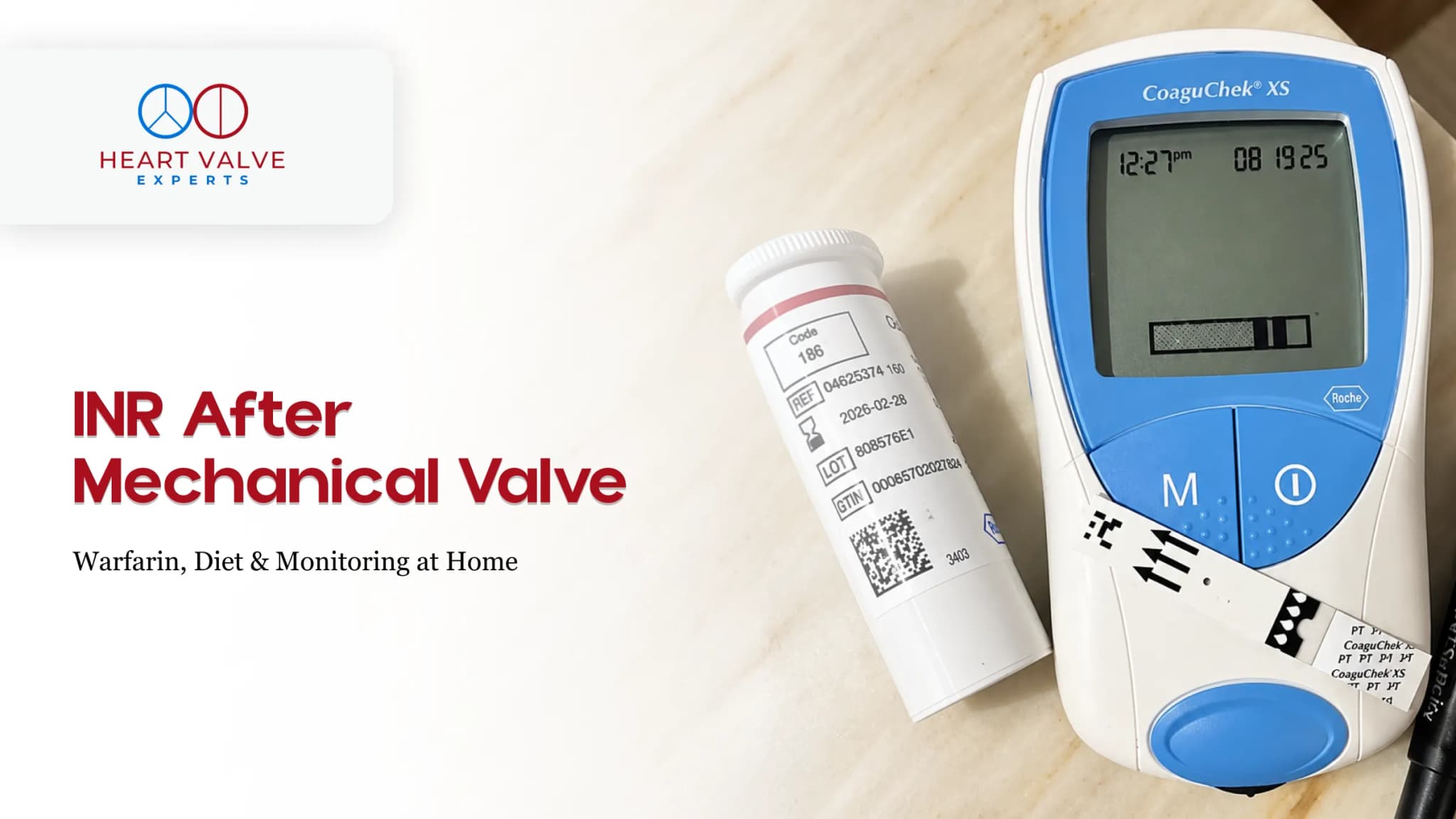
Can You Monitor Your INR at Home?
Home INR testing may suit some patients who have access to an appropriate device and receive training on how to use it. Your doctor should confirm whether home testing is suitable and explain how to share results and manage dose changes safely.
Home monitoring does not replace medical follow-up. You still need a plan for reviewing your results and contacting your treating team when your INR is outside the target range. If you cannot access a home monitor, ask about local laboratories or hospitals that provide INR testing.
Warfarin Diet – What Can You Eat After Mechanical Valve Replacement?
You do not usually need to avoid all green vegetables while taking warfarin. The main concern is a sudden change in how much vitamin K you consume, because vitamin K affects how warfarin works.
Spinach, broccoli, cabbage and other leafy green vegetables contain vitamin K. You can generally continue eating them. A major change in your diet may affect your INR and lead your doctor to review your dose.
You can continue eating a balanced diet that includes vegetables and other nutritious foods. If you plan to change your eating habits, start a weight-loss diet or make a major change in the amount of leafy greens you eat.
Certain drinks and products can also affect warfarin. The NHS advises patients taking warfarin to avoid cranberry products and grapefruit juice and to discuss alcohol use with their healthcare professional. You should also check before starting herbal remedies, vitamins or supplements.
| Can Other Medicines Affect Your INR? Yes. Some medicines can change how warfarin works or increase your risk of bleeding. These include certain antibiotics, painkillers, prescription medicines, over-the-counter products and herbal remedies. |
Warfarin Side Effects
The main serious side effect of warfarin is bleeding. You may notice bruising more easily but some symptoms need urgent medical attention.
Seek urgent care if you have bleeding that will not stop, blood in your urine or stools, black stools, or blood in your vomit or cough. A sudden severe headache, confusion, slurred speech or new weakness also needs emergency assessment because it may indicate serious bleeding or another urgent problem.
Sudden breathlessness or chest pain also needs urgent assessment, particularly if you have a mechanical heart valve. If your valve was damaged by rheumatic fever, your medical history is important when your doctor investigates new symptoms.
Do not wait for your next scheduled INR test if you develop severe symptoms. Take your warfarin record and details of your mechanical valve with you when seeking medical care.
| Expert Insight “In patients with mechanical heart valves, maintaining the prescribed INR range is an important part of long-term care. Both under-anticoagulation and excessive anticoagulation carry risks, which is why warfarin dosing and regular INR monitoring need to be managed carefully. Patients should also recognise warning signs such as unusual bleeding, sudden breathlessness or chest pain, as these may require urgent assessment. Keeping a consistent medication routine and attending scheduled INR checks can help reduce avoidable complications after valve replacement.” Dr. Aniruddha Pawar, MD, DM, FSC AIInterventional Cardiologist, Heart Valve Experts |
Returning to Nigeria or Bangladesh After Heart Valve Surgery in India
International patients who receive a mechanical heart valve in India must plan their INR follow-up before returning home. Lifelong warfarin treatment requires regular testing and a clinician who can review each result and advise on dose changes. This arrangement should be in place before departure.
Documents to Carry
Patients should obtain their discharge summary and heart valve operation report from the hospital. The current warfarin prescription and the latest INR results are also essential. These papers should state the type and position of the valve wherever possible. They should be kept in hand luggage and not in checked baggage.
INR Monitoring After Returning to Nigeria
Patients returning to Nigeria should identify a hospital or laboratory that performs INR tests before they travel. Not every centre offers this service. It is important to ask how quickly reports are issued and how the reviewing clinician can be reached. A local doctor or anticoagulation service should be agreed in advance to supervise warfarin treatment.
INR Monitoring After Returning to Bangladesh
Patients returning to Bangladesh should book the first local INR test and a follow-up appointment while still in India. Recent results and the warfarin prescription should be taken to that first visit. This keeps the gap between hospital care and home care as short as possible.
When INR Results Remain Out of Range
A clinician will usually ask about missed doses and new medicines. Changes in diet and recent illness are also reviewed. Patients should keep a written record of these details and present it at each appointment. A warfarin dose must never be adjusted without medical advice even if a test or appointment is delayed. In that situation the patient should contact the local doctor or the treating team in India.
What Should You Discuss With Your Heart Valve Expert?
Your follow-up appointment is an opportunity to discuss your INR results, medicines and recovery. Tell your doctor if you have new symptoms, difficulty obtaining warfarin, problems accessing blood tests or repeated readings outside your prescribed range.
Depending on your symptoms and examination, your doctor may also recommend an echocardiogram or other tests to check how your mechanical valve is functioning. If you are unsure about your treatment plan or need help arranging follow-up after returning home, contact Heart Valve Experts to discuss your requirements.
Discuss your INR monitoring and post-surgery follow-up with the Heart Valve Experts
Frequently Asked Questions
What is the normal INR range after mechanical heart valve replacement?
For many patients, the target range is 2.0–3.0 for a current-generation mechanical aortic valve without additional clotting risk factors and 2.5–3.5 for a mechanical mitral valve. Your prescribed range may differ depending on your valve and medical history.
Can I stop taking warfarin if my INR is stable?
No. A stable INR means your treatment is currently within its intended range. It does not mean you no longer need warfarin. Patients with mechanical heart valves generally require lifelong anticoagulation unless their treating team advises otherwise.
What happens if my INR is too high?
A high INR can increase your risk of bleeding. Contact your treating team for advice. Seek urgent medical attention if you have significant bleeding, a severe headache or other serious symptoms.
Can I eat spinach while taking warfarin?
Yes, in most cases. Spinach contains vitamin K, but you do not usually need to avoid it completely. Keep your intake consistent and discuss major dietary changes with your doctor.
How often should I get an INR test after returning home?
The schedule depends on how stable your INR is and whether your warfarin dose or health has changed. Arrange your first test before travelling and follow the schedule recommended by your treating team.
Can I take another blood thinner instead of warfarin?
Do not switch medicines on your own. Direct oral anticoagulants such as apixaban and rivaroxaban are not recommended as substitutes for warfarin in patients with mechanical heart valves.
What should I do if I cannot get an INR test on the planned date?
Contact your treating doctor or local clinician as soon as possible to arrange testing and receive advice. Do not change your warfarin dose or skip treatment because a test is delayed.
References
Cambridge University Hospitals NHS Foundation Trust (2025) Dietary advice for patients taking warfarin.
NHS (2026) Warfarin: medicine used to prevent and treat blood clots.
Otto, C.M. et al. (2021) ‘2020 ACC/AHA Guideline for the Management of Patients With Valvular Heart Disease’, Circulation, 143(5), pp. e72–e227.

About The Author
Dr. Ankur U. Phatarpekar M.D., D.M., FSCAI
With over 15 years of expertise, Dr. Phatarpekar is recognised as a renowned interventional cardiologist in Mumbai, specialising in complex coronary interventions, structural heart procedures, and pioneering work in Transcatheter Aortic Valve Implantation (TAVI).
● Blog
Related Heart Valve Experts (HVE) Blog
INR Normal Range – Normal Levels, Warfarin & Mechanical Valves
ASO Titre Test: Normal Range and What a High ASO Result Means

Rheumatic Fever – Symptoms, Jones Criteria and How It Damages Heart Valves

Rheumatic Heart Disease – Causes, Symptoms, Treatment

Tricuspid Regurgitation Treatment