
Rheumatic Fever – Symptoms, Jones Criteria and How It Damages Heart Valves
Table of Contents
- What Is Rheumatic Fever?
- What Are the Symptoms of Rheumatic Fever?
- What Are the Jones Criteria for Rheumatic Fever?
- How Is Rheumatic Fever Diagnosed?
- How Does Rheumatic Fever Damage Heart Valves?
- What Is the Treatment for Rheumatic Fever?
- Can Rheumatic Fever Be Prevented?
- Rheumatic Fever and Heart Valve Care For International Patients
- When Should You See a Heart Valve Expert?
- Frequently Asked Questions
- References

Medically Reviewed By
Dr. Ankur U. Phatarpekar
Get A Call Back
Key Takeaways
- Rheumatic fever is an inflammatory illness that can develop after an infection caused by Group A Streptococcus bacteria.
- Rheumatic fever symptoms may include fever, painful joints, skin changes, involuntary movements and heart inflammation.
- The Jones criteria help doctors assess whether a person has acute rheumatic fever.
- Heart inflammation during rheumatic fever can damage the valves and lead to rheumatic heart disease.
- Treatment includes antibiotics, medicines to control inflammation and long-term prevention of repeat episodes when indicated.
- Prompt treatment of strep throat and appropriate follow-up can help reduce the risk of heart valve damage.
Rheumatic fever is an inflammatory illness that can develop after a Group A Streptococcus infection. Common symptoms include fever and painful joints. In some cases the inflammation affects the heart and damages its valves. Doctors use the Jones criteria to help diagnose rheumatic fever.
You may remember having a sore throat as a child and getting better within a few days. But what if a few weeks later you developed a fever or pain in your knees and ankles? Would you think the two were connected? Many people would not. Yet this is one way rheumatic fever can begin after a strep infection.
The heart is what makes this illness concerning. You might recover from the fever and joint pain but still have damage to a heart valve. Sometimes there are no clear signs for years. Later, you may find yourself getting breathless on a walk that never used to trouble you. The valve damage caused by rheumatic fever is known as rheumatic heart disease.
Hearing about possible heart damage can be frightening. But having a sore throat or joint pain does not automatically mean you have rheumatic fever. A doctor can assess your symptoms and decide whether further tests are needed. Let’s look at what to watch for and how the condition is diagnosed.
What Is Rheumatic Fever?
Rheumatic fever is an inflammatory illness that can develop after a Group A Streptococcus infection. It can affect the joints, skin, brain and heart. In some cases, inflammation of the heart leaves permanent damage to the valves.
The condition most often affects children between 5 and 14 years of age. However, older children and adults can develop it too (WHO, 2024).
Your body normally uses its immune system to fight infection. With rheumatic fever, that response can mistakenly attack healthy tissues. If the heart is affected, the inflammation can leave the valves scarred or change how they open and close.
You may recover from rheumatic fever without realising that your heart valves have been affected. The damage can remain unnoticed for years before symptoms appear or an echocardiogram reveals a problem. This is known as rheumatic heart disease.
Could rheumatic fever have affected your heart valves?
What Are the Symptoms of Rheumatic Fever?
Rheumatic fever symptoms usually develop around 1 to 5 weeks after a Group A Streptococcus infection. The symptoms vary from person to person and may affect different parts of the body.
Following are the symptoms to look out for.
| Symptom | What you may notice |
| Fever | Your body temperature rises during the illness. |
| Joint pain and swelling | Your knees or ankles may become painful and swollen. The pain can move from one joint to another. |
| Heart inflammation | Inflammation can affect your heart valves. You may notice breathlessness or chest discomfort. A doctor may also hear a new heart murmur. |
| Uncontrolled movements | You may find that your hands, feet or face move in ways you cannot control. Changes in mood or behaviour can also occur. |
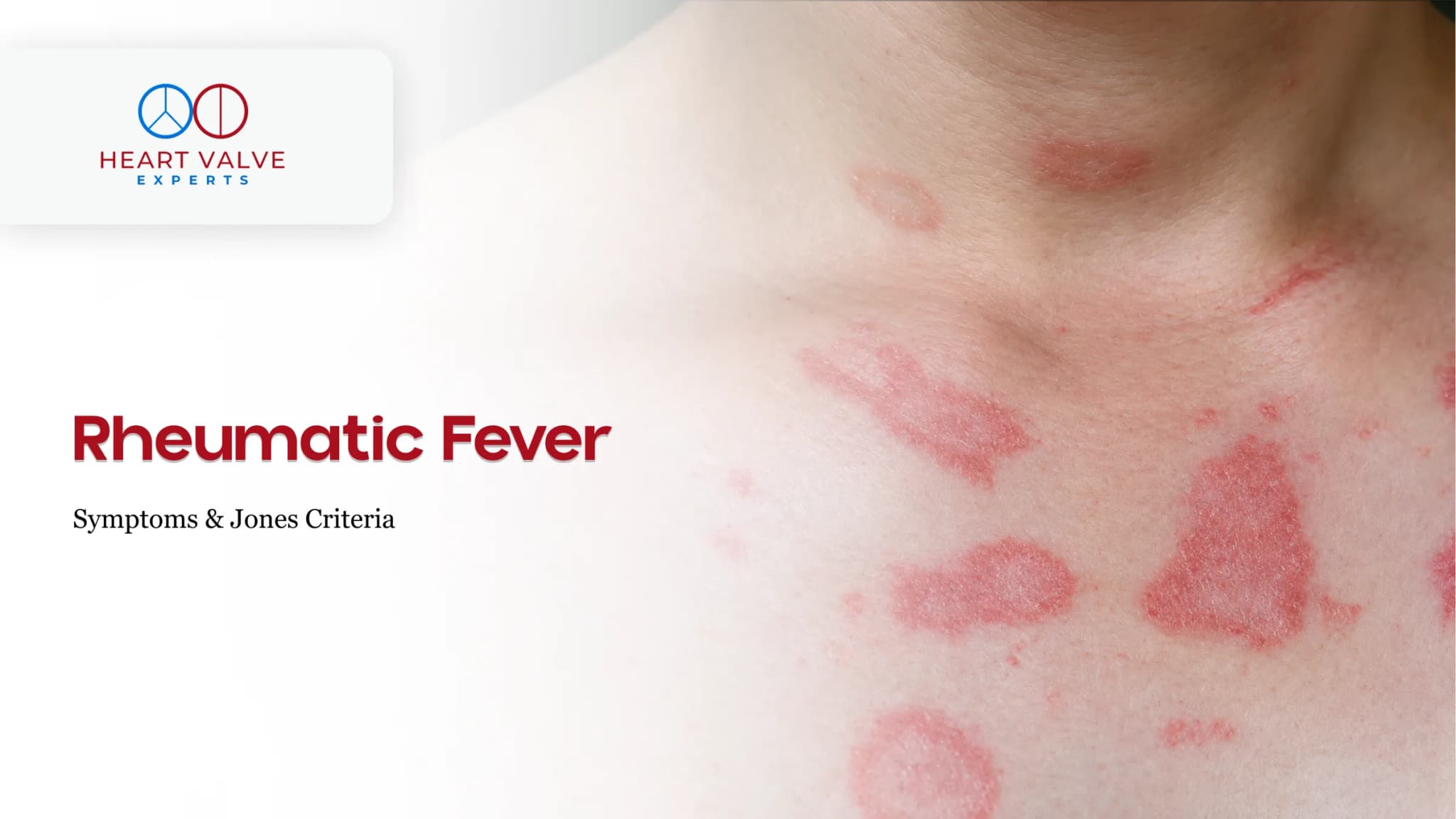
| Skin changes | You may develop a ring-shaped rash or small firm lumps beneath your skin. |
You do not need to have all these symptoms to have rheumatic fever. You might notice fever and joint pain while changes affecting your heart are less obvious. This can make the condition difficult to identify from symptoms alone.
So how does your doctor work out whether these symptoms point to rheumatic fever?
They look at your medical history and examination findings alongside specific diagnostic criteria. One of the main tools they use is the Jones criteria, which help doctors assess whether rheumatic fever is the likely cause of your symptoms.
What Are the Jones Criteria for Rheumatic Fever?
The Jones criteria help doctors diagnose acute rheumatic fever by assessing symptoms and examination findings alongside evidence of a recent Group A Streptococcus infection. The criteria include major and minor findings. Doctors use them with your medical history and test results to reach a diagnosis (Gewitz et al., 2015).
“The Jones criteria help us assess the combination of symptoms and clinical findings that may indicate acute rheumatic fever. A recent streptococcal infection is also an important part of the assessment. We interpret these findings together with the patient’s history and investigation results to establish the diagnosis and check for possible heart involvement.”
Dr. Meghav Manoj Shah, M.B.B.S., M.D. (Internal Medicine), D.M., D.N.B. (Cardiology), AFESC
Director – Cardiac Sciences, HVS Hospitals
How does Jones Criteria work for Rheumatic Fever when you visit a doctor?
Suppose you have had a sore throat recently and now your knees are swollen or you have a fever. Your doctor may want to know whether these symptoms are connected. They will ask about your recent illness and examine you for other signs of rheumatic fever. They may also recommend blood tests and heart investigations.
Some findings carry more weight than others. The Jones criteria group them as major or minor.
| Major criteria | Minor criteria |
| Carditis, including inflammation detected on echocardiography | Fever |
| Arthritis or joint inflammation depending on the population’s risk level | Joint pain without the major arthritis criteria being met |
| Sydenham chorea which causes involuntary movements | Raised inflammatory markers such as ESR or CRP |
| Erythema marginatum (a characteristic skin rash) | Prolonged PR interval on an ECG, when applicable |
| Subcutaneous nodules |
Your doctor will also look for evidence of a recent strep infection. This may involve a throat test or blood tests that show your body’s response to the bacteria.
| Does having a few of these symptoms mean you have rheumatic fever? Not necessarily. For a first episode, doctors generally look for two major criteria or one major and two minor criteria. Evidence of a recent strep infection is also usually needed. There are recognised exceptions, and the criteria vary depending on the population’s risk level. |
Your doctor considers all the findings together rather than relying on one symptom or test. Fever and joint pain can occur for many reasons, so the Jones criteria are not a checklist for self-diagnosis.
How Is Rheumatic Fever Diagnosed?
If your doctor suspects rheumatic fever, they will ask about your recent illnesses and the symptoms you have noticed. A sore throat in the weeks before the fever or joint pain can be an important clue. They will also examine you and check whether your heart may be affected.
No single test can confirm every case of rheumatic fever. Your doctor may recommend a combination of tests depending on your symptoms and examination findings.
| Test | What it tells your doctor |
| Blood tests | ESR and CRP show whether there is inflammation in your body. Tests for streptococcal antibodies can provide evidence of a recent infection. |
| Throat swab or rapid strep test | Checks for a Group A Streptococcus infection. The bacteria may no longer be present by the time rheumatic fever develops. |
| Electrocardiogram (ECG) | Records your heart’s electrical activity and can reveal changes in its rhythm or electrical conduction. |
| Echocardiogram | Uses ultrasound to examine your heart valves and how your heart works. It can detect heart inflammation even when you have no obvious heart symptoms. |
Your doctor may also recommend an ASO titre test to check whether your body has recently responded to a streptococcal infection. A high ASO titre alone does not mean you have rheumatic fever. It also cannot tell your doctor whether your heart valves have been damaged.
If your heart is affected, an echocardiogram helps your doctor understand what is happening and decide whether you need further monitoring or treatment.
How Does Rheumatic Fever Damage Heart Valves?
Rheumatic fever can damage the heart valves when the immune system’s response to a strep infection causes inflammation in the heart. The affected valves may become thickened or scarred and struggle to open or close properly. This can lead to rheumatic heart disease.
You may recover from rheumatic fever and assume the illness is behind you. But if your heart valves were affected, the damage can go unnoticed for years. The mitral valve is most commonly involved. It controls blood flow between the upper and lower chambers on the left side of your heart. The aortic valve can also be affected.
| Two problems can develop depending on how the valve is damaged. Mitral stenosisThe mitral valve becomes narrower than it should be. Blood has difficulty flowing through it and pressure can build up towards the lungs. You may notice that you get breathless while walking or climbing stairs. Activities that once felt easy may become harder. Mitral regurgitationHere the mitral valve does not close properly. Some blood flows backwards with each heartbeat instead of moving forward. If the leak is significant your heart has to work harder to pump blood around your body. |
You may wonder how you would know if rheumatic fever had affected your heart. Sometimes symptoms take years to appear. If you had rheumatic fever as a child, tell your doctor about it even if you feel well today. An echocardiogram can show how your valves are working and help your doctor decide whether you need follow-up or treatment.
What Is the Treatment for Rheumatic Fever?
Rheumatic fever treatment includes antibiotics to clear the streptococcal infection and medicines to ease inflammation. Doctors also focus on preventing future episodes because repeated attacks can cause further damage to the heart valves.
Your doctor may recommend the following rheumatic fever treatment based on your symptoms and test results.
Antibiotics
These treat the Group A Streptococcus infection. You may still need them even if your sore throat has cleared by the time rheumatic fever is diagnosed.
Anti-inflammatory medicines
If you have painful or swollen joints your doctor may prescribe medicines to relieve the inflammation.
| Expert Insight “When treating rheumatic fever, we need to assess whether the heart valves have been affected and how this may influence the patient’s long-term care. If valve damage develops, its severity and effect on heart function help guide decisions about monitoring and treatment. Patients with significant valve disease may need further evaluation to determine whether a valve repair or replacement procedure is appropriate.” Dr. Ankur Phatarpekar, M.D., D.M., FSCAI Interventional Cardiologist, Heart Valve Experts, Mumbai |
Treatment for heart complications
If your heart is affected you may need additional treatment. This depends on the severity of the inflammation and whether your heart function or valves have been affected.
Preventive antibiotics
After rheumatic fever you may need regular antibiotics to lower the risk of another attack. The duration depends on your age and medical history as well as whether you have heart or valve damage.
| Why is follow-up necessary for Rheumatic Fever Treatment? If your heart was affected during rheumatic fever your doctor may continue to monitor you even after your symptoms have settled. You may feel well but valve problems can still need attention. Repeat episodes can also cause further damage. |
Your doctor may arrange an echocardiogram to check your valves over time. The results help determine whether you need ongoing monitoring or treatment.
Can Rheumatic Fever Be Prevented?
Treating a strep throat infection promptly can lower the risk of rheumatic fever. If your child has a sore throat with fever, get medical advice to find out whether testing or antibiotics are needed. The same applies to you. Antibiotics should only be taken when prescribed by a doctor.
If you have had rheumatic fever before, you may need preventive antibiotics for several years. Do not stop them just because you feel well. Your doctor will decide how long you need them and whether your heart needs regular checks.
For some people, the effects on the heart become a long-term concern. If a damaged valve eventually needs to be replaced with a mechanical valve, you will usually need warfarin and regular INR tests. Your INR result helps your doctor check whether your blood is clotting at the right rate.
| What if you are unsure whether rheumatic fever has affected your heart? Breathlessness during everyday activities, unusual tiredness or a heart murmur found during an examination are reasons to seek medical advice. |
If a valve problem has been identified, a Heart Valve Expert can assess its severity and discuss what care you may need.
Rheumatic Fever and Heart Valve Care For International Patients
If you have had rheumatic fever and are concerned about lasting heart valve damage, an assessment can help clarify whether you need monitoring or further treatment. Through Heart Valve Experts’ international patient services, you can explore care options in India based on your diagnosis and current heart health.
If you are travelling from Bangladesh, Nigeria, Kenya or another country, your first step is to share your medical history and any previous valve assessment. This is especially useful if rheumatic fever occurred years ago and you have only recently developed breathlessness, fatigue or swelling in your legs.
Your evaluation will depend on whether the valve has narrowed, is leaking or is affecting your heart’s function. The Heart Valve Experts team can review your existing reports and advise whether further assessment is needed after you arrive in India.
When Should You See a Heart Valve Expert?
If you have previously had rheumatic fever and have been told that your heart may be affected, an echocardiogram and specialist assessment can help clarify the condition of your valves.
Seek medical review if you develop increasing breathlessness, reduced exercise tolerance, persistent palpitations or swelling of the feet and ankles. These symptoms can have several causes, but they should not be ignored when there is a history of rheumatic fever.
Consult at Heart Valve Experts to get a review of your symptoms, previous reports and current echocardiogram findings can help establish whether you need continued monitoring or further valve assessment.
Have you been diagnosed with rheumatic fever or valve damage?
Frequently Asked Questions
What is rheumatic fever?
Rheumatic fever is an inflammatory illness that can develop after a Group A Streptococcus infection. It can affect the joints, skin, brain and heart.
What are the first symptoms of rheumatic fever?
Early symptoms may include fever and painful, swollen joints. Some people also develop heart inflammation, skin changes or involuntary movements.
What are the Jones criteria for rheumatic fever?
The Jones criteria are clinical guidelines that help doctors diagnose acute rheumatic fever by assessing major and minor manifestations alongside evidence of a preceding streptococcal infection.
Can rheumatic fever damage heart valves?
Yes. Inflammation during rheumatic fever can damage the heart valves and leave lasting scarring. This may lead to rheumatic heart disease.
Can rheumatic fever occur in adults?
Yes. Although it most commonly affects children and adolescents, rheumatic fever can also occur in adults.
Can rheumatic fever be treated?
Yes. Treatment may include antibiotics, anti-inflammatory medicines and long-term preventive antibiotics when indicated. Early treatment and follow-up help reduce the risk of complications.
References
Gewitz, M.H. et al. (2015). Revision of the Jones Criteria for the diagnosis of acute rheumatic fever in the era of Doppler echocardiography: a scientific statement from the American Heart Association. Circulation, 131(20), pp. 1806–1818.
World Health Organization (2024). WHO guideline on the prevention and diagnosis of rheumatic fever and rheumatic heart disease. Geneva: World Health Organization.
World Health Organization (2025). Rheumatic heart disease.

About The Author
Dr. Ankur U. Phatarpekar M.D., D.M., FSCAI
With over 15 years of expertise, Dr. Phatarpekar is recognised as a renowned interventional cardiologist in Mumbai, specialising in complex coronary interventions, structural heart procedures, and pioneering work in Transcatheter Aortic Valve Implantation (TAVI).
● Blog
Related Heart Valve Experts (HVE) Blog
Rheumatic Fever – Symptoms, Jones Criteria and How It Damages Heart Valves
Rheumatic Heart Disease – Causes, Symptoms, Treatment
Tricuspid Regurgitation Treatment

Tricuspid Regurgitation Symptoms and The Right-Heart Warning Signs

What Is Tricuspid Regurgitation and What Does It Mean for Your Heart?