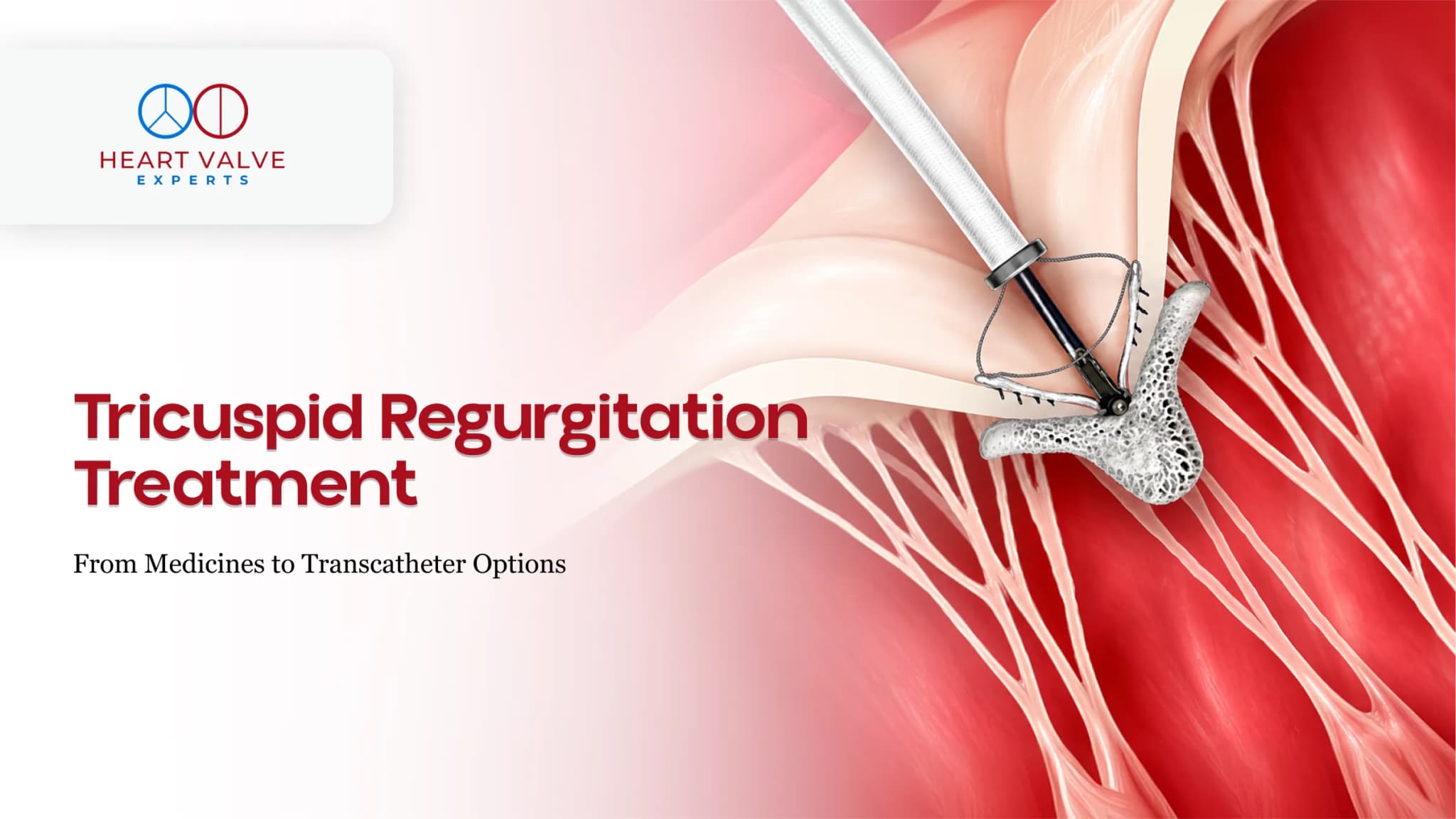
Tricuspid Regurgitation Symptoms and The Right-Heart Warning Signs
Table of Contents
- What Are the Symptoms of Tricuspid Regurgitation?
- Why Does Tricuspid Regurgitation Cause Leg Swelling?
- Breathlessness as a Tricuspid Regurgitation Symptom
- Why Does Tricuspid Regurgitation Cause Fatigue?
- What Is the Link Between TR and Right-Sided Heart Failure Symptoms?
- How Can You Tell if Your Symptoms Are Getting Worse?
- Can Mild Tricuspid Regurgitation Cause Symptoms?
- What Should You Do If You Have TR Symptoms?
- Frequently Asked Questions
- References

Medically Reviewed By
Dr. Ankur U. Phatarpekar
Get A Call Back
Tricuspid regurgitation symptoms may include ankle and leg swelling, tiredness, breathlessness, reduced exercise tolerance and abdominal swelling. Mild tricuspid regurgitation may cause no symptoms, while more significant leakage can lead to these changes as fluid builds up.
You might be thinking, “I do feel a little more tired these days, but is that really related to my heart?” That is a very reasonable question. Many people first notice something as simple as needing to slow down during a routine activity or feeling more comfortable after taking a short rest. Sometimes, there is no obvious change at all in the beginning.
The important thing is not to worry about every small change. Tell your doctor what you have been experiencing, how long it has been happening and whether it is becoming more frequent. These details can help your doctor understand the bigger picture and decide whether your symptoms could be related to tricuspid regurgitation or another cause.
What Are the Symptoms of Tricuspid Regurgitation?
Common tricuspid regurgitation symptoms include ankle and leg swelling, fatigue, breathlessness, reduced exercise tolerance, abdominal swelling, loss of appetite, early fullness and rapid weight gain from fluid retention. Some people may have only one or two symptoms. Others may have several.
So, what does that actually feel like? You might tell your doctor, “My ankles have started swelling by evening,” or “I get tired doing things that never used to bother me.” You may find yourself stopping to catch your breath on the stairs. You may also need more breaks during a walk or feel full after eating much less than you normally would.
| Symptom | What you may notice |
| Leg or ankle swelling | Your ankles or feet may become swollen. Your shoes or socks may also feel tighter, especially in the evening. |
| Fatigue | You may feel unusually tired during activities that you normally manage without much effort. |
| Breathlessness | You may become short of breath while walking, climbing stairs or doing physical activity. |
| Reduced exercise tolerance | You may need more breaks or may not be able to exercise for as long as you used to. |
| Abdominal swelling | Your abdomen may feel swollen, tight or heavier than usual. |
| Loss of appetite or early fullness | You may feel full after eating a smaller meal. You may also notice that you are not as hungry as usual. |
| Weight gain from fluid retention | Your weight may increase over a short period without a clear change in how much you are eating. |
You may not have every symptom on this list. If you have noticed a change, tell your doctor exactly what you are feeling. You can explain when it started and what you were doing when you noticed it. Also mention whether it has been getting worse. This can help your doctor understand your symptoms and decide whether they could be related to tricuspid regurgitation.
Why Does Tricuspid Regurgitation Cause Leg Swelling?
Tricuspid regurgitation can cause leg and ankle swelling when blood leaks backward through the tricuspid valve and pressure rises on the right side of the heart. This increased pressure also affects the veins and can push fluid into the tissues of the legs and feet.
You may first notice the change around your ankles. Your shoes may feel tighter towards the evening. Your socks may also leave deeper marks than usual. When you mention this to your doctor, details such as when the swelling starts and whether it improves after resting can help them understand what is happening.
If the fluid build-up increases, the swelling may move further up the legs. You may also notice a feeling of fullness or swelling around your abdomen.
Leg swelling by itself does not mean you have tricuspid regurgitation. Kidney disease, liver problems, some medicines and other heart conditions can cause similar swelling. Your doctor will look at the swelling along with your other symptoms and examination findings. Tests such as an echocardiogram can then help show whether the tricuspid valve is involved.
When tricuspid regurgitation affects how well the heart handles blood returning from the body, you may notice other changes as well. Breathlessness can be one of them, especially during physical activity.
Breathlessness as a Tricuspid Regurgitation Symptom
Breathlessness is one of the possible tricuspid regurgitation symptoms. It can happen when the valve leak is significant or when other heart problems are affecting how well the heart moves blood.
You may notice this first when your heart needs to work harder. Walking uphill may leave you more breathless than before. You may need to stop while climbing stairs or take a break during household work. If you could manage the same activity comfortably earlier and now need to slow down, tell your doctor about that change.
Breathlessness can have many causes. Lung disease, anaemia, low fitness and other heart conditions can produce similar symptoms. Your doctor may therefore look at your right ventricular function, pulmonary pressures and echocardiogram findings along with your symptoms to understand what is causing the breathlessness.
If your breathlessness is becoming more frequent or is happening with less activity than before, it is important to have it assessed for severe tricuspid regurgitation. And sometimes the change is not only in how easily you breathe. You may also find that the same activity leaves you feeling much more tired than before. This brings us to fatigue as another symptom of tricuspid regurgitation.
Why Does Tricuspid Regurgitation Cause Fatigue?
Fatigue can be a symptom of tricuspid regurgitation, particularly when a significant valve leak affects how efficiently the right side of the heart handles blood returning from the body. Fluid retention can add to the discomfort and make normal activities feel more tiring.
This change can be more meaningful when you already have other tricuspid regurgitation symptoms. If fatigue is happening along with ankle swelling or breathlessness, tell your doctor. The combination can give a clearer picture than tiredness alone.
Fatigue can also come from many other causes such as poor sleep, anaemia, thyroid problems, medicines or other health conditions. Your doctor will consider these possibilities while assessing your heart and symptoms.
“If you are feeling more tired than usual and also notice swelling or breathlessness, please let your cardiologist know. These changes can help us understand how your tricuspid regurgitation is affecting your heart.”
Dr. Amruta Limaye, M.B.B.S., MD (General Medicine), DM (Cardiology)
Interventional Cardiologist, Heart Valve Experts, Mumbai
When TR becomes more significant, the effects are not limited to feeling tired or noticing swelling. Ongoing pressure on the right side of the heart can lead to a broader set of symptoms. This is where tricuspid regurgitation and heart failure symptoms can become connected.
What Is the Link Between TR and Right-Sided Heart Failure Symptoms?
Significant tricuspid regurgitation can contribute to right-sided heart failure when the right side of the heart struggles to handle blood returning from the body. This can cause blood and fluid to build up in the veins and organs, leading to increasing swelling, abdominal fullness, fluid-related weight gain and worsening fatigue.
Research in 1,311 patients with significant secondary tricuspid regurgitation found that clinical signs of right-heart failure, including peripheral oedema and functional limitation, were associated with different stages of right-heart failure and had prognostic significance. (Dietz et al., 2020)
You may notice that your ankles and legs are becoming more swollen or that your weight is increasing over a short period because of fluid retention. Your abdomen may also feel tight or full. As congestion increases, you may feel more tired and find that activities you previously managed easily now require more effort.
Fluid congestion can also affect the organs in the abdomen. This may reduce your appetite or make you feel full after eating a small amount. You may describe it to your doctor as feeling unusually heavy or uncomfortable around your abdomen even when you have not eaten much.
Tricuspid Regurgitation Symptoms and Right-Heart Warning Signs
| Right-Heart Warning Signs | What They May Indicate |
| Increasing ankle or leg swelling | Fluid is building up in the tissues |
| Rapid weight gain | Extra fluid may be accumulating in the body |
| Abdominal swelling or fullness | Congestion may be affecting the abdomen |
| Increasing fatigue | The heart may be having more difficulty handling blood flow |
| Reduced exercise capacity | Activities may become harder as symptoms progress |
These symptoms do not tell your doctor exactly how severe your tricuspid regurgitation is. They provide another part of the clinical picture. Your cardiologist will assess them along with your echocardiogram, right ventricular function, fluid status and other clinical findings to understand how the valve problem is affecting your heart and circulation.(Nguyen & Rudski, 2020)
If your symptoms are becoming more frequent or affecting your usual activities, it may indicate that the condition is changing. So, how can you tell if your symptoms are getting worse?
How Can You Tell if Your Symptoms Are Getting Worse?
It can be surprisingly difficult to notice a gradual change in your own health. You adapt without realising it.
You may start taking the lift instead of the stairs. You may walk more slowly, take more breaks or stop going for your usual evening walk. If your ankles swell, you may simply loosen your footwear and carry on with your day.
That is why comparing your current routine with what you could comfortably do a few months earlier can be useful.
Pay attention to changes such as:
- Walking a shorter distance before becoming tired
- Needing more breaks during routine activities
- New or increasing ankle swelling
- Breathlessness during activities that were previously comfortable
- Increasing abdominal fullness or swelling
- Unexplained weight gain over a short period
- Feeling unusually tired throughout the day
None of these changes proves that your tricuspid regurgitation has worsened. But if you already have TR, they are useful details to share with your cardiologist.
Research has shown that progressive right-heart dysfunction and worsening clinical symptoms in significant TR are associated with poorer outcomes, which is why changes in symptoms and right-heart function need to be followed over time. (Agarwal and Hahn, 2023)
Can Mild Tricuspid Regurgitation Cause Symptoms?
Mild tricuspid regurgitation often does not cause noticeable symptoms, particularly when the rest of the heart is functioning normally.
If you have mild TR and begin experiencing significant swelling, breathlessness or a sudden reduction in exercise capacity, it is worth looking for another cause rather than assuming that the mild leak is responsible.
Your doctor may review the echocardiogram, examine your heart and consider other conditions that could explain the symptoms.
This is also why the word “mild” on an old report should not be used to explain away new symptoms. Your current symptoms and current heart findings matter more than an old report on its own.
What Should You Do If You Have TR Symptoms?
Do not try to judge the severity of your tricuspid regurgitation from symptoms alone. Someone with a significant valve leak may have surprisingly few symptoms, while someone with breathlessness or swelling may have another underlying condition.
What matters is noticing a change and having it assessed properly.
If you already have an echocardiogram, take your current and previous reports to your appointment. The comparison can help your cardiologist understand whether the valve leak or the right side of your heart has changed.
If the TR is significant, symptoms are progressing or the right heart is showing changes, a heart valve expert can help assess whether continued monitoring is appropriate or whether tricuspid regurgitation treatment needs to be considered.
At Heart Valve Experts (HVE), the cardiac team can review your symptoms, previous echocardiograms and current heart function. The evaluation can help assess the severity of tricuspid regurgitation, right ventricular function and other findings that may be contributing to your symptoms. Based on these findings, your doctor can explain whether regular follow-up is suitable or whether further evaluation and treatment should be considered.
Frequently Asked Questions
What are the most common tricuspid regurgitation symptoms?Common symptoms include leg and ankle swelling, fatigue, breathlessness, reduced exercise tolerance and abdominal swelling or fullness.
Can tricuspid regurgitation cause leg swelling?Yes. Significant TR can increase pressure on the veins returning blood to the heart and lead to fluid accumulation in the legs and ankles.
Can tricuspid regurgitation cause fatigue?Yes. Significant TR may be associated with tiredness and reduced exercise capacity, particularly when right-heart function is affected.
Can tricuspid regurgitation cause breathlessness?It can. Breathlessness may occur with significant TR, although lung disease and other heart conditions can cause similar symptoms.
What does right-sided heart failure feel like?Symptoms can include leg swelling, abdominal swelling or fullness, weight gain from fluid, fatigue and reduced ability to exercise.
Can mild tricuspid regurgitation cause symptoms?Mild TR often causes no symptoms when the right side of the heart is otherwise normal. New symptoms should still be evaluated rather than automatically attributed to a mild leak.
When should I worry about swelling with tricuspid regurgitation?Increasing ankle or leg swelling, particularly when accompanied by breathlessness, fatigue, abdominal swelling or rapid fluid-related weight gain, should be discussed with your doctor.
Can tricuspid regurgitation symptoms get worse over time?They can, particularly when the valve leak becomes more significant or begins to affect right-heart function. Changes in symptoms can be useful when assessing the condition over time.
Should I see a specialist for tricuspid regurgitation symptoms?Specialist evaluation can be useful when symptoms are increasing, the TR is moderate or severe, the right heart has enlarged or its function has changed, or treatment is being considered.
References
Dietz, M.F., Prihadi, E.A., van der Bijl, P., Ajmone Marsan, N., Delgado, V. and Bax, J.J. (2020) ‘Prognostic implications of staging right heart failure in patients with significant secondary tricuspid regurgitation’, JACC: Heart Failure, 8(8), pp. 670–679. doi: 10.1016/j.jchf.2020.02.008.
Topilsky, Y., Medina Inojosa, J., Benfari, G., Vaturi, O., Maltais, S., Michelena, H., Mankad, S. and Enriquez-Sarano, M. (2018) ‘Clinical presentation and outcome of tricuspid regurgitation in patients with systolic dysfunction’, European Heart Journal, 39(39), pp. 3584–3592. doi: 10.1093/eurheartj/ehy434.
Agarwal, V. and Hahn, R. (2023) ‘Tricuspid regurgitation and right heart failure: The role of imaging in defining pathophysiology, presentation, and novel management strategies’, Heart Failure Clinics, 19(4), pp. 505–523. doi: 10.1016/j.hfc.2023.03.008.

About The Author
Dr. Ankur U. Phatarpekar M.D., D.M., FSCAI
With over 15 years of expertise, Dr. Phatarpekar is recognised as a renowned interventional cardiologist in Mumbai, specialising in complex coronary interventions, structural heart procedures, and pioneering work in Transcatheter Aortic Valve Implantation (TAVI).
● Blog
Related Heart Valve Experts (HVE) Blog
Tricuspid Regurgitation Treatment
Tricuspid Regurgitation Symptoms and The Right-Heart Warning Signs
What Is Tricuspid Regurgitation and What Does It Mean for Your Heart?

Severe Tricuspid Regurgitation and Treatment
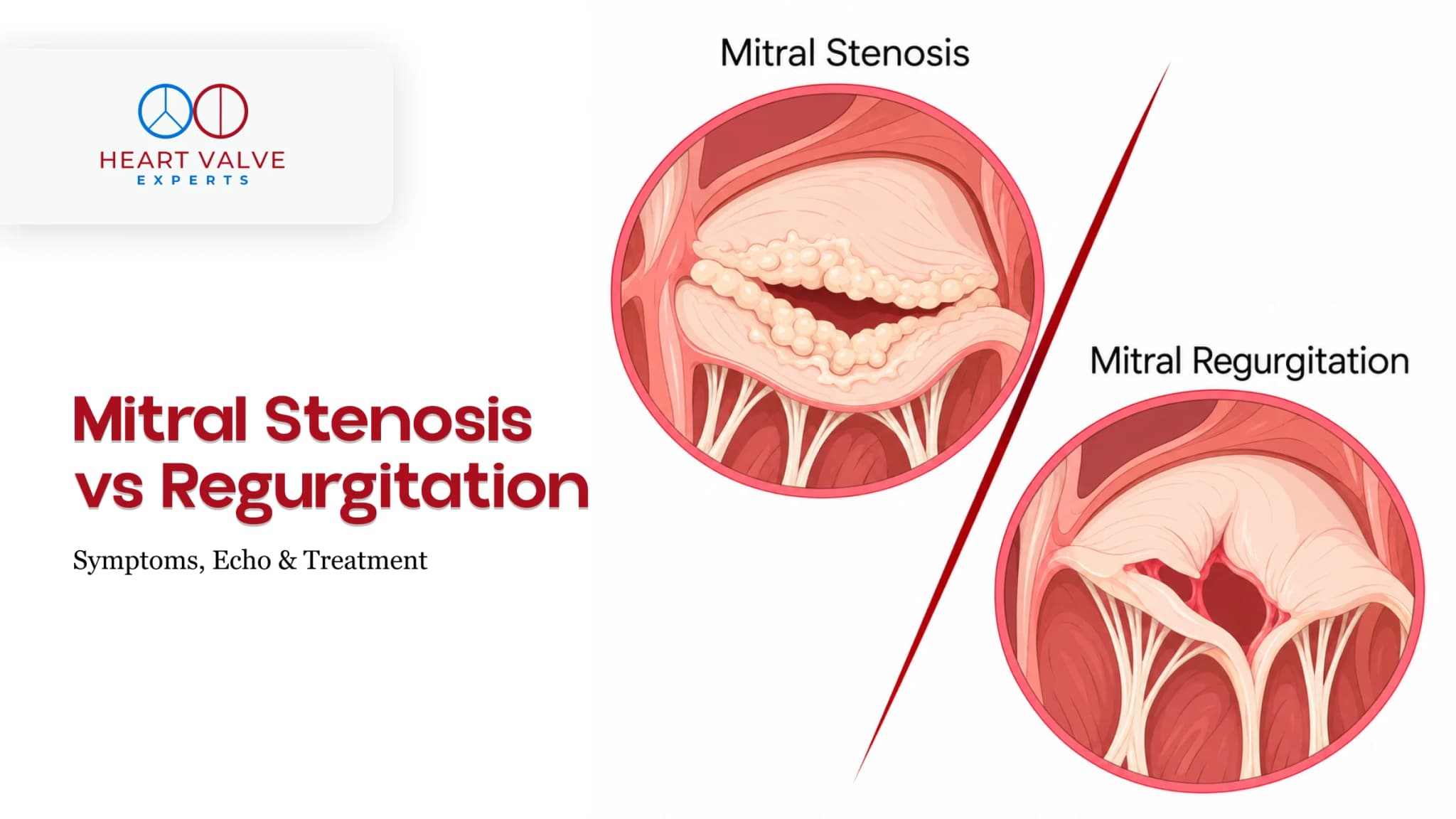
Mitral Stenosis vs Mitral Regurgitation: Differences in Symptoms, Echo Findings and Treatment