
What Is Tricuspid Regurgitation and What Does It Mean for Your Heart?
Table of Contents
- What Is Tricuspid Regurgitation?
- What Does Tricuspid Regurgitation Mean on an Echo?
- How Is Tricuspid Regurgitation Graded?
- How Doctors Assess the Severity of Tricuspid Regurgitation
- What Causes Tricuspid Regurgitation?
- What Symptoms Can Tricuspid Regurgitation Cause?
- Can Mild Tricuspid Regurgitation Become Severe?
- What Should You Do If Your Echo Shows Tricuspid Regurgitation?
- How Is Tricuspid Regurgitation Treated?
- When Should You See a Heart Valve Expert?
- Frequently Asked Questions
- References

Medically Reviewed By
Dr. Ankur U. Phatarpekar
Get A Call Back
Tricuspid regurgitation means that the tricuspid valve allows some blood to flow backward into the right atrium. It is graded as mild, moderate or severe based on echocardiogram findings.
Mild TR often needs monitoring, while moderate or severe TR may need closer evaluation.
Treatment depends on the severity, symptoms, cause of TR and its effect on the right side of the heart.
Now look at your echo report closely.
You may have been told that there is “tricuspid regurgitation”, but that term alone does not tell you whether the problem needs treatment. The next line in your report may say mild, moderate or severe. That is where the picture starts to become clearer. If your report says mild tricuspid regurgitation, you may have no symptoms at all and may simply be asked to come back for a follow-up echo. If it says moderate or severe, your doctor will want to look more closely at what is happening to the right side of your heart.
And this is where reading the whole report matters. The degree of leakage is important along with the size and function of your right ventricle, your right atrium and the pressure in your lungs
Let’s go through these findings one by one, so when you look at your echo report, you know what you are actually looking at.
What Is Tricuspid Regurgitation?
Tricuspid regurgitation is a leak in the tricuspid valve that allows some blood to flow backward into the right atrium. The tricuspid valve sits between the right atrium and right ventricle and normally closes when the right ventricle contracts. The leakage can range from mild to severe.
What is actually happening inside your heart?
Blood returning from your body enters the right atrium and then passes through the tricuspid valve into the right ventricle. From there, the right ventricle pumps it toward your lungs.
When the right ventricle contracts, the tricuspid valve should close to keep the blood moving forward. However, if you are suffering from tricuspid regurgitation, your tricuspid valve does not close completely. This leads to some blood moving backwards into the right atrium.
A small leak may have little effect on your heart and may not cause any symptoms. A larger leak can put extra strain on the right side of your heart after a long time.
This is why it helps to read the whole report rather than the TR finding alone. The severity of the leak and the condition of the right side of your heart tell you much more about what the finding means for you.
What Does Tricuspid Regurgitation Mean on an Echo?
On an echocardiogram, tricuspid regurgitation means that the scan has picked up leakage across the tricuspid valve. The important part of the report is how much leakage is present and whether the right side of your heart is showing any changes because of it.
The echo gives your cardiologist a moving view of the valve and the blood flowing across it. It can show whether the valve is closing properly and help assess the right atrium, right ventricle and the pressure on the right side of the heart.
This is where your full echo report becomes useful. You might have TR with a completely normal right heart, or you might have TR along with an enlarged right ventricle or reduced right-heart function. Those findings can change how your doctor views the valve problem.
Doctors therefore bring several echo findings together when assessing TR. Research comparing echocardiography with cardiac MRI has shown why this matters, as individual measurements do not always tell the same story (Zhan et al., 2020).
The next step is to work out how significant the leakage is. That is why your report may describe your TR as mild, moderate or severe.
“When I see tricuspid regurgitation on an echocardiogram, I do not judge the valve by the leak alone. I also look at the right side of the heart and how well it is functioning. That tells me whether the finding is simply something to follow or needs closer attention.”
— Dr. Ankur Phatarpekar, M.D., D.M., FSCAI
Interventional Cardiologist and Structural Heart Specialist

How Is Tricuspid Regurgitation Graded?
Tricuspid regurgitation is generally graded as mild, moderate or severe on an echocardiogram. In some patients with very extensive leakage, there are newer classifications that include massive and torrential TR grades as well. (Tribouilloy et al., 2020).
Your echocardiogram report gives a lot of information, including the appearance of the valve, blood-flow patterns and changes in the right side of your heart to determine how significant the leakage is.
Mild Tricuspid Regurgitation
Mild tricuspid regurgitation means there is a relatively small amount of backward blood flow. You may have no symptoms, and the finding may have been picked up during an echo done for another reason.
If the rest of your heart looks normal, your doctor may simply recommend follow-up. Mild TR on its own does not usually mean that you need a valve procedure.
Moderate Tricuspid Regurgitation
Moderate TR means the leakage is more significant and usually needs closer follow-up. Your doctor will consider whether your right atrium or right ventricle has enlarged, whether your heart is pumping normally and whether you have symptoms such as swelling, fatigue or breathlessness.
For treating moderate TR, surgery is not the only option. The treatment is decided based on whether the leak is beginning to affect your heart or your day-to-day health.
Severe Tricuspid Regurgitation
Severe tricuspid regurgitation means there is a good amount of leakage through the valve and it can increase the strain on the right side of your heart. This may also lead to enlargement of the right heart, reduced right ventricular function and symptoms caused by fluid build-up.
Research found that patients undergoing echocardiography, increasing TR severity, was associated with higher mortality and heart-failure hospitalisation, with the strongest associations seen in moderate and severe TR (Chorin et al., 2020).
A severe result does not automatically mean you need surgery. It means the diagnosis needs a careful assessment, particularly if you have symptoms or changes in right-heart function.
How Doctors Assess the Severity of Tricuspid Regurgitation
Your echocardiogram does not give your doctor a single number that says how severe the TR is. Instead, several parts of the scan are assessed together to understand the size of the leak and what it looks like as blood moves through the valve.
Colour Doppler
Colour Doppler shows the backward flow through the tricuspid valve. Think of it as a way for your doctor to see where the blood is going when the valve does not close completely.
The size and pattern of this flow can provide useful information, but the colour image alone cannot reliably grade TR. Your doctor therefore looks at it alongside the other findings on the echo.
Vena Contracta
The vena contracta is simply the narrowest part of the leaking blood flow just after it passes through the valve.
You do not need to remember the term itself. What matters is that its width gives your doctor another clue about the size of the leak. A measurement of around 7 mm or more has traditionally supported severe TR when considered with the other echo findings (Nguyen and Rudski, 2020).
PISA
PISA is another way of looking at blood flow around a leaking valve. It helps your doctor estimate how much blood is moving backward.
You are unlikely to need to interpret this measurement yourself. Your cardiologist uses it when a more detailed measurement of the leak is useful.
Hepatic Vein Flow
Your hepatic veins carry blood from your liver back toward your heart. When TR is significant, the usual direction and pattern of blood flow in these veins can change.
One finding doctors look for is systolic flow reversal. When this appears along with other signs of significant TR, it can support a severe TR assessment (Nguyen and Rudski, 2020).
Rest of Your Heart
Your doctor will also look at the right atrium and right ventricle to see whether they are normal in size and how well they are working. The echo may also provide information about the tricuspid valve ring, inferior vena cava and pressure in the blood vessels leading to the lungs.
You may not recognise all of these terms on your report, and you do not need to interpret them on your own. Your cardiologist puts these findings together to decide how significant your TR is.
That is how your doctor moves from an echo showing tricuspid regurgitation to a more specific grade such as mild, moderate or severe.
What Causes Tricuspid Regurgitation?
The tricuspid regurgitation causes can be divided into two categories. Primary TR occurs when the tricuspid valve itself is abnormal, while secondary TR occurs when changes in the heart prevent the valve from closing properly. The cause matters because it influences how your doctor approaches the valve problem.
Primary Tricuspid Regurgitation
In primary tricuspid regurgitation, the problem starts in the valve itself. The valve may have developed differently from birth, become damaged over time or been affected by an infection or another condition. Rheumatic valve disease, injury and certain structural abnormalities are also possible tricuspid regurgitation causes.
When your doctor finds this type of TR, the next step is to understand what has happened to the valve.
Is its structure abnormal?
Has it been damaged?
Is it failing to close properly?
The answers help explain where the leakage is coming from.
Secondary Tricuspid Regurgitation
Secondary tricuspid regurgitation occurs when changes in the rest of the heart affect how the valve closes. The valve leaflets may not be the main problem.
For example, if the right side of your heart becomes enlarged, the ring around the tricuspid valve can stretch. The leaflets may then be pulled apart and leave a gap through which blood flows backward.
Common secondary tricuspid regurgitation causes include pulmonary hypertension, right ventricular enlargement, left-sided heart disease, other valve conditions and atrial fibrillation. Conditions that increase pressure or volume on the right side of your heart can also contribute.
Knowing what is causing your tricuspid regurgitation helps your doctor decide what needs attention. Sometimes treating the underlying heart problem can reduce the strain on the valve. In other cases, the valve itself may need closer evaluation.
What Symptoms Can Tricuspid Regurgitation Cause?
Symptoms of tricuspid regurgitation can include swelling in the legs or ankles, fatigue, breathlessness, reduced exercise tolerance and abdominal swelling. Mild TR may cause no symptoms, while more significant leakage can lead to fluid build-up and affect the right side of your heart.
With more advanced tricuspid regurgitation symptoms, fluid can build up in the abdomen and leave you feeling full or uncomfortable. Some people also notice a fast or irregular heartbeat. These symptoms can have other causes too, so your doctor will look at them alongside your heart tests.
If you already have tricuspid valve regurgitation, notice what has changed from your usual routine. Maybe you are not walking as far. Maybe your shoes feel tighter by evening because your ankles are swollen. Maybe climbing a flight of stairs now leaves you breathless. These small changes are worth mentioning at your next appointment.
And if your TR was mild when it was first found, you may naturally wonder whether it can change over time. Can a mild leak become severe?
Can Mild Tricuspid Regurgitation Become Severe?
Mild tricuspid regurgitation can become more significant over time, but this does not happen to everyone. Diagnosing mild TR today does not mean that you will eventually have severe TR.
What happens next depends on why the valve is leaking in the first place. If your heart is healthy and only the leak is small, your doctor may simply keep an eye on it. If you also have pulmonary hypertension, an enlarged right side of the heart or another valve problem, you may need closer follow-up.
You may wonder why another echocardiogram is needed if you are feeling well. The reason is simple. Your doctor wants to compare the new scan with the old one.
The repeat echocardiogram lets your doctor compare the leak with your earlier scan and check whether the right side of your heart and its pumping function have remained stable.That comparison gives a clearer picture of your TR over time.
So if you have mild tricuspid regurgitation, try not to worry about what it might become years from now. Keep your follow-up appointments and let your doctor know if you develop new breathlessness, swelling or a noticeable drop in your usual stamina. That gives your doctor a chance to act if the picture starts to change.
What Should You Do If Your Echo Shows Tricuspid Regurgitation?
If your echocardiogram shows tricuspid regurgitation, your next step is to understand how severe the leak is and whether it is affecting your heart.
During your appointment, go through the report with your cardiologist. Find out what grade of TR you have and whether your right ventricle and right atrium are normal. Ask about your pulmonary pressure too, especially if you have been feeling breathless or unusually tired.
It is also useful to know why the leak has developed. If you have been getting more breathless or your ankles have started swelling, mention it. Even a small change from your usual routine can help your doctor understand the bigger picture.
Before you finish the appointment, ask when you should have your next echo. If the TR is more than mild or your right heart has changed, your cardiologist may also suggest an assessment by a heart valve specialist.
And if the report feels full of numbers and unfamiliar terms, that is completely normal. You do not have to work it all out yourself. What you need to know is whether the leak is small or significant, whether your heart is handling it well and what your doctor wants you to do from here.
How Is Tricuspid Regurgitation Treated?
Treatment for tricuspid regurgitation depends on how severe the leak is, what is causing it and whether it is affecting your heart or causing symptoms. Mild TR may only need regular follow-up, while significant TR may require medicines or a procedure to treat the valve.
So what does tricuspid regurgitation treatment actually involve?
If you have fluid build-up, your doctor may prescribe medicines such as diuretics. They can help reduce swelling and breathlessness by removing excess fluid from your body. However, these medicines do not repair the valve.
When the leak is more significant, your doctor may discuss tricuspid valve repair. This helps the valve close properly while preserving your own valve when this is possible. In some patients, tricuspid valve replacement may be considered instead.
Another treatment aspect is the tricuspid valve surgery, which may be appropriate for some patients depending on the condition of the valve and their overall health.
If you have a higher risk with open surgery, a transcatheter tricuspid valve treatment may be considered in selected cases. Research in patients with symptomatic severe TR has found that transcatheter treatment can improve symptoms and functional capacity in appropriate patients (Sorajja et al., 2020).
The right treatment for tricuspid regurgitation depends on your symptoms, right-heart function, valve structure, other heart conditions and procedural risk all have to be considered.
For some people, the best treatment is to monitor the valve. For others, medicines are enough to control symptoms for a period of time. If the leak is causing significant problems, a heart valve team can help decide whether repair, replacement or transcatheter treatment is the better option.
If your TR is getting worse or your cardiologist has started discussing a valve procedure, you may want to have the valve looked at by someone who deals with these problems regularly. A heart valve expert can review your scans and help you understand whether you need treatment now or whether it is better to keep monitoring the valve.
When Should You See a Heart Valve Expert?
If your tricuspid regurgitation is moderate or severe, or you have started noticing more breathlessness, swelling or tiredness, this is a good time to speak with a heart valve expert. An expert can go through your echo in detail and look at the valve leak alongside the condition of your right heart.
This becomes particularly useful when you are being asked to consider tricuspid valve repair, replacement or a transcatheter procedure and want to understand your choices before deciding.
At Heart Valve Experts, the focus is on heart valve conditions and the treatment decisions that come with them. You can bring your echo reports and previous test results, discuss what has changed and get a clearer idea of whether you need treatment now or continued follow-up is enough.
Frequently Asked Questions
It means that some blood is flowing backward through your tricuspid valve when the right ventricle contracts.
Usually, mild TR is not an immediate concern when your right heart is normal and you have no significant symptoms. Your doctor may recommend monitoring.
No. Rheumatic heart disease is a common cause worldwide, but mitral stenosis can also result from calcium build-up around the valve, particularly in older adults, and less commonly from congenital or other conditions.
A completely normal tricuspid valve has no significant backward leakage. Small or mild TR can, however, be found on echocardiograms without causing a significant problem.
The grades describe how significant the valve leakage is. Doctors use several echocardiographic findings together to determine the severity rather than relying on one measurement.
Yes. Significant TR can cause fluid retention, which may lead to swelling in your legs and ankles.
Yes, particularly when TR is significant or occurs along with other heart conditions. Breathlessness can have many causes, so your doctor needs to assess the complete picture.
Not always. Severe TR does not automatically mean you need surgery. Your symptoms, right-heart function, valve anatomy, cause of TR and procedural risk all influence the treatment decision.
Yes, it can progress in some patients. The risk depends on the cause of TR and other heart conditions. Follow-up echocardiograms can help identify changes.
There is no single schedule that applies to everyone. Your doctor will decide when you need another echocardiogram based on the severity of your TR, symptoms and other heart findings.
Consider an expert evaluation if your TR is moderate or severe, your symptoms are increasing, your right heart is enlarged or its function is reduced, or your doctor is considering a valve procedure.
References
Chorin, E., Rozenbaum, Z., Topilsky, Y., Konigstein, M., Ziv-Baran, T., Richert, E., Keren, G. and Banai, S. (2020). Tricuspid regurgitation and long-term clinical outcomes. European Heart Journal – Cardiovascular Imaging, 21(2), pp.157–165.
Nguyen, T.K.H. and Rudski, L.G. (2020). Optimal echocardiographic approach to the evaluation of tricuspid regurgitation. Current Cardiology Reports, 22(10), 108.
Tribouilloy, C., et al. (2020). Improvement of the prognosis assessment of severe tricuspid regurgitation by the use of a five-grade classification of severity. The American Journal of Cardiology, 135, pp.147–154.
Sorajja, P., Whisenant, B., Hamid, N., Naik, H., Makkar, R., Faqih, A., et al. (2020). Natural history of severe tricuspid regurgitation: outcomes after transcatheter tricuspid valve intervention compared to medical therapy. International Journal of Cardiology, 321, pp.150–157.
Chorin, E., Rozenbaum, Z., Topilsky, Y., Konigstein, M., Ziv-Baran, T., Richert, E., Keren, G. and Banai, S. (2020). Tricuspid regurgitation and long-term clinical outcomes. European Heart Journal – Cardiovascular Imaging, 21(2), pp.157–165.
Zhan, Y., Senapati, A., Vejpongsa, P., Xu, J., Shah, D.J. and Nagueh, S.F. (2020). Comparison of echocardiographic assessment of tricuspid regurgitation against cardiovascular magnetic resonance. JACC: Cardiovascular Imaging, 13(7), pp.1461–1471.

About The Author
Dr. Ankur U. Phatarpekar M.D., D.M., FSCAI
With over 15 years of expertise, Dr. Phatarpekar is recognised as a renowned interventional cardiologist in Mumbai, specialising in complex coronary interventions, structural heart procedures, and pioneering work in Transcatheter Aortic Valve Implantation (TAVI).
● Blog
Related Heart Valve Experts (HVE) Blog
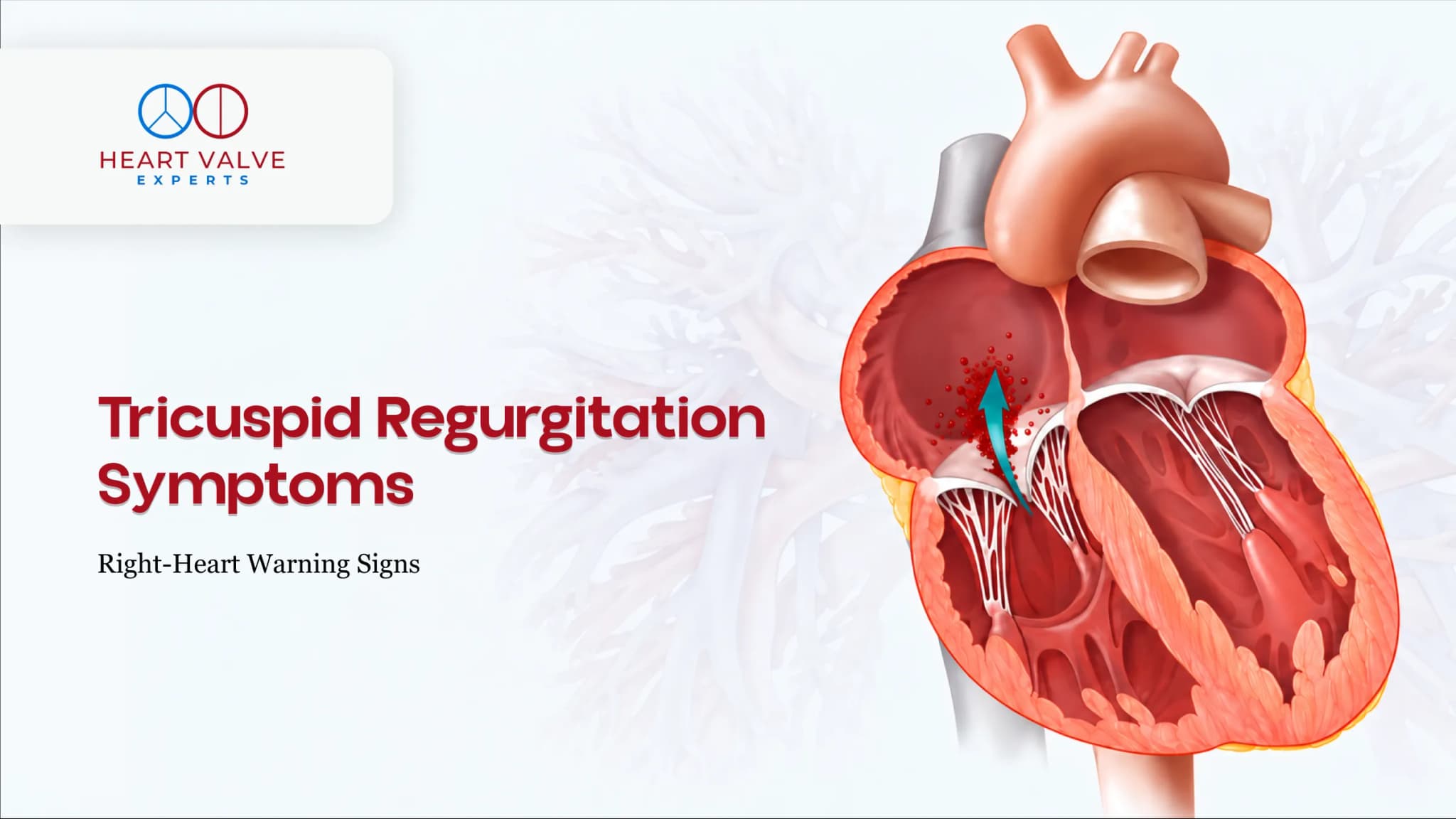
Tricuspid Regurgitation Treatment
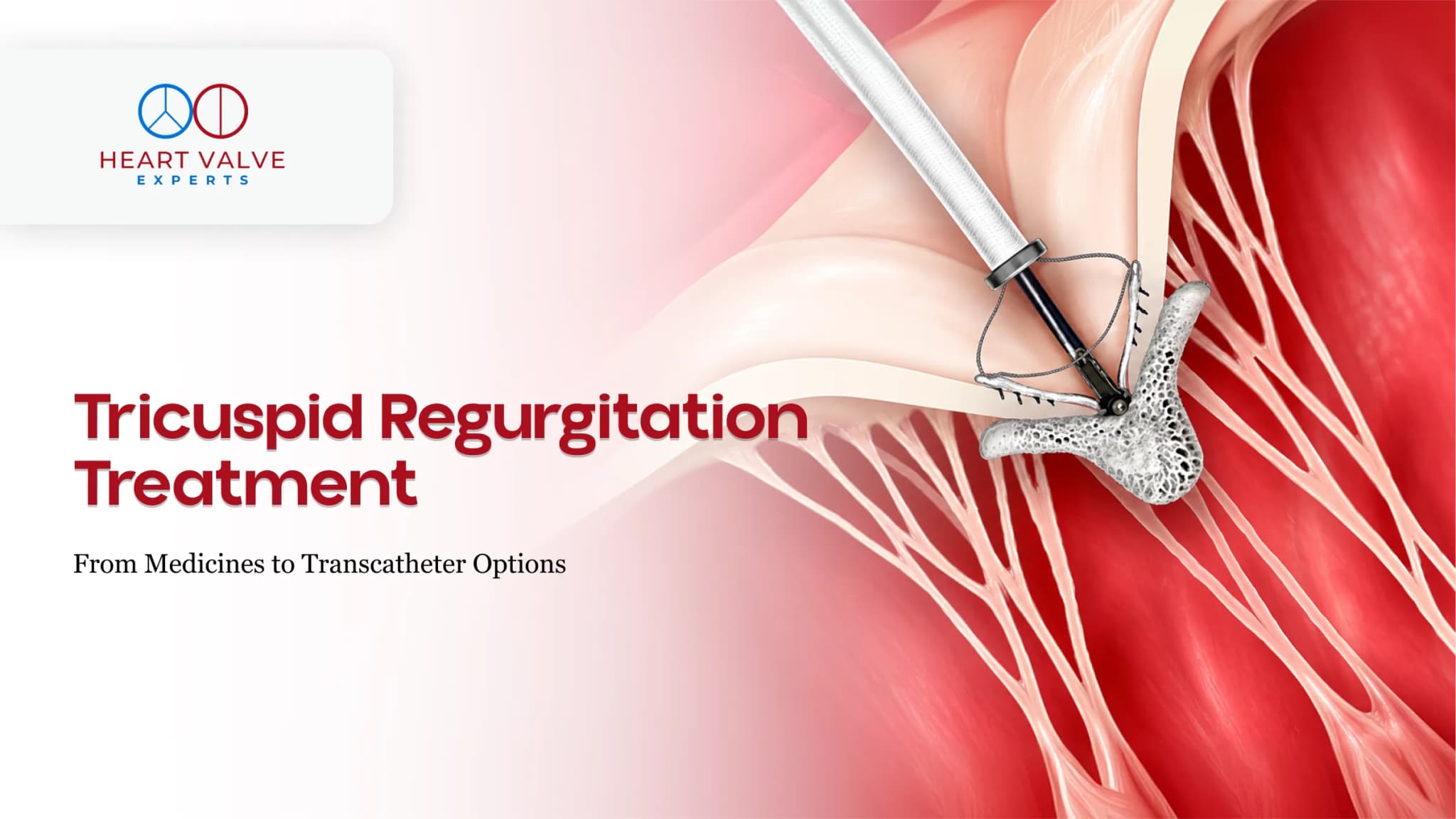
Tricuspid Regurgitation Symptoms and The Right-Heart Warning Signs

What Is Tricuspid Regurgitation and What Does It Mean for Your Heart?

Severe Tricuspid Regurgitation and Treatment
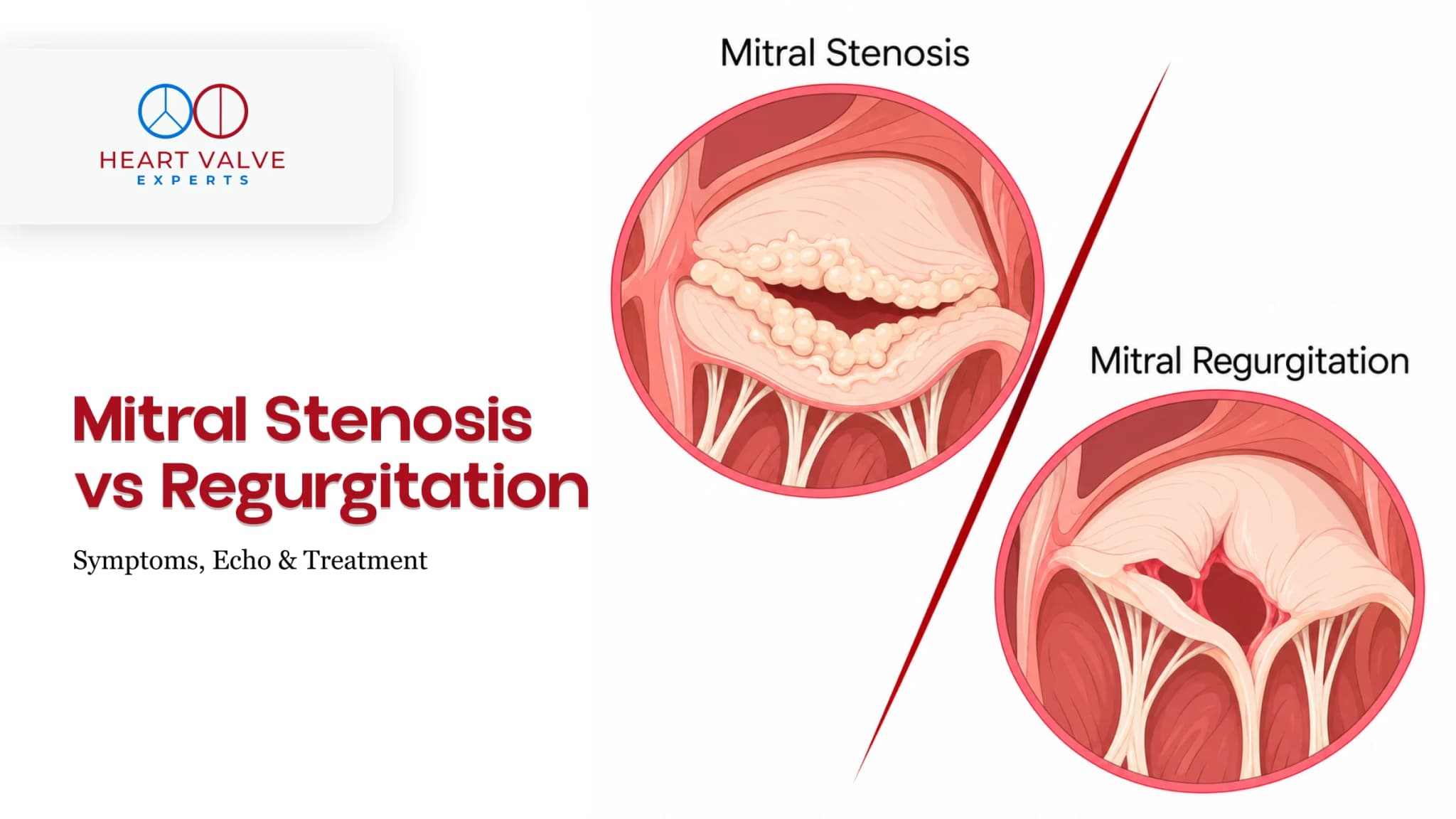
Mitral Stenosis vs Mitral Regurgitation: Differences in Symptoms, Echo Findings and Treatment