A heart murmur is a sound heard between heartbeats that doctors detect using a stethoscope. While the term may sound alarming, not all heart murmurs indicate a serious health problem. Some murmurs are harmless, while others may signal underlying heart conditions that require medical attention.
Understanding what a heart murmur is, why it happens, and when to seek treatment can help you make informed decisions about your heart health.
A heart murmur is an unusual sound produced during the cardiac cycle. Under normal circumstances, a healthy heartbeat produces two distinct sounds: the familiar “lub” and “dub” as the heart valves open and close. However, a murmur is any extra or abnormal sound layered on top of these.
The heart murmur definition in clinical medicine is straightforward. It is a sound caused by turbulent blood flow through the heart’s chambers or valves. Think of it like water rushing through a garden hose when the flow is smooth, there is no noise. When something narrows the hose or the pressure becomes too high, you hear a rush.
It is important to understand that a murmur of heart is a sign, not a diagnosis. It can indicate anything from a completely harmless physiological change to a serious structural problem with a heart valve. Notably, the next step after detecting one is always investigation, not panic.
Not all heart murmurs are the same. Clinicians classify the types of heart murmurs based on when they occur in the cardiac cycle, their intensity, and whether they are linked to underlying disease.
Functional murmurs occur when blood flows slightly faster than usual through the heart without any structural defect. These are common in children and newborns, but can also appear in adults during pregnancy, fever, anaemia, intense physical exertion, or hyperthyroidism. An innocent murmur requires no treatment and often resolves once the underlying trigger is addressed.
Pathological murmurs are often caused by structural problems within the heart, where one or more heart valves are affected. These are the murmurs in valvular disease that require further investigation and, in many cases, medical or interventional management.
Understanding heart murmur causes depends on whether the murmur is functional or pathological. Here are the most common causes of an abnormal murmur:
This is the most common reason adults develop an abnormal heart murmur. Think of your heart valves like doors, they open to let blood through and close to stop it from flowing backwards. When these doors get stuck, stiff, or start leaking, blood doesn’t flow smoothly, and that turbulence creates the sound your doctor hears as a murmur.
The most common valve problems behind a murmur are a valve that has become too narrow and stiff thus, making the heart work harder to push blood through, or a valve that doesn’t close properly and allows blood to leak in the wrong direction. In some individuals, it’s a combination of both. What’s remarkable is that an experienced cardiologist can often tell which valve is affected and how severely just by listening with a stethoscope even before a scan is done.
Some people are born with a heart that is structured slightly differently and this can sometimes cause a murmur right from birth or show up later in childhood or early adulthood. A common example is a small hole between the two sides of the heart, which causes blood to flow where it shouldn’t and creates that tell-tale whooshing sound, medically it is called ventricular septal defect. Another example is a heart valve that forms with two flaps instead of the usual three, which can work fine for years before eventually causing problems. These conditions are more common than most people realise, and many people live completely normal lives once they are diagnosed and monitored properly.
Sometimes the heart murmur has nothing to do with the heart itself. When your body doesn’t have enough healthy red blood cells to carry oxygen around a condition most people know as anemia, the heart has to pump blood much faster than usual to make up for it. This faster, more forceful blood flow can create a whooshing sound that shows up as a murmur. The good news is that once the anaemia is treated and your blood count returns to normal, this type of murmur usually disappears on its own.
A functional murmur causes no symptoms; it is usually discovered incidentally during a routine check-up. However, when a murmur is linked to valve disease or a structural cardiac problem, the following heart murmur symptoms may develop over time: shortness of breath especially on exertion or when lying flat, chest tightness or pain, unusual fatigue and reduced exercise tolerance, heart palpitations, dizziness or fainting, swelling of the ankles or legs, and in congenital cases, a bluish tinge to the lips or fingertips.
If you have been experiencing unexplained breathlessness, unusual fatigue, or your doctor has flagged something during a routine check-up, it is worth taking the next step. A thorough cardiac evaluation can either give you complete peace of mind or help detect something early when treatment is simpler, safer, and far more effective. Speak with our specialists at Heart Valve Experts, Mumbai.
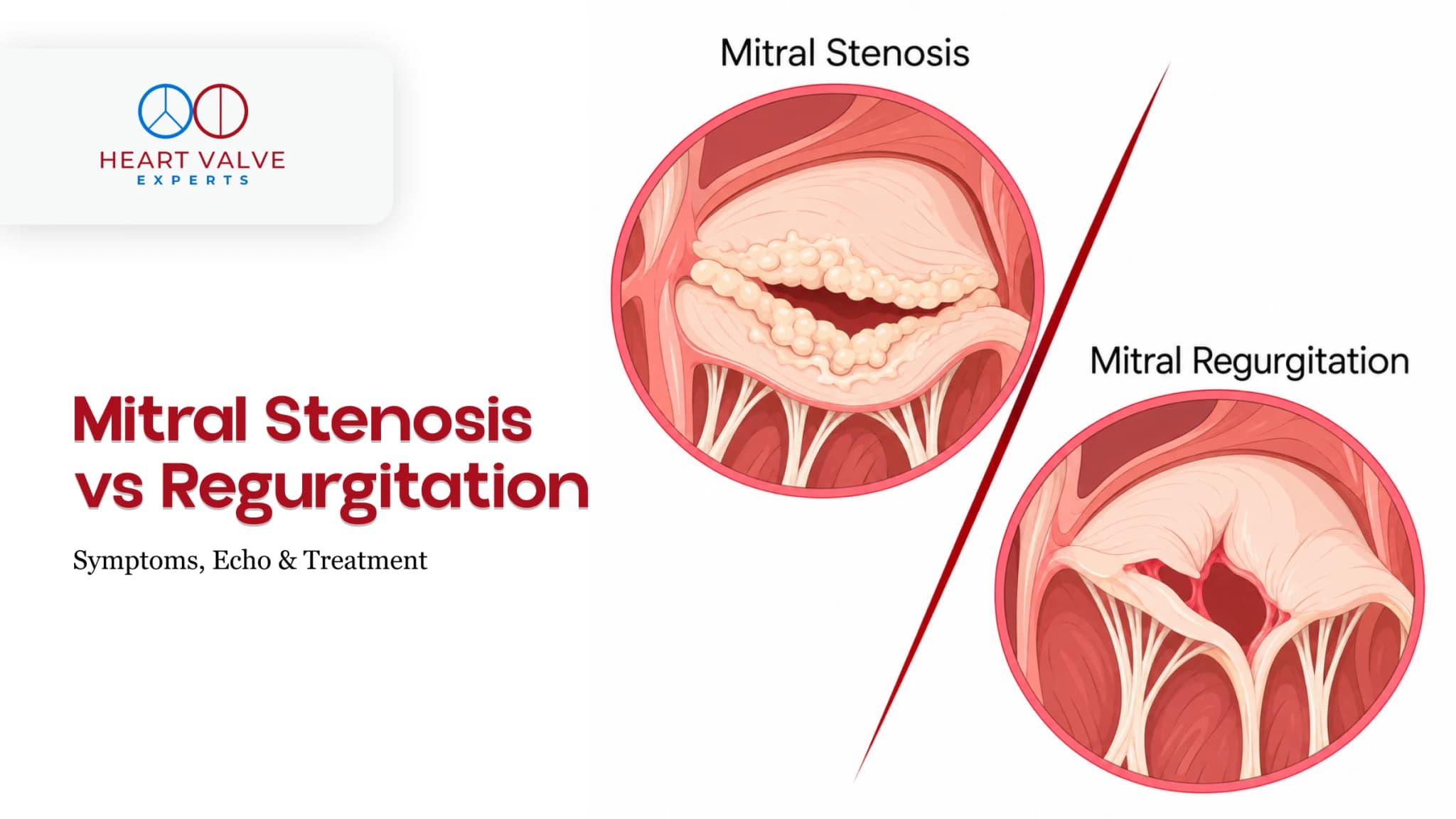
When a murmur is traced back to valvular heart disease, the stakes can be significant. The four heart valves act as one-way gates keeping blood flowing in the right direction. When they become narrowed (stenosis) or leaky (regurgitation), the heart must work harder to compensate. Over time, this increased workload can lead to ventricular hypertrophy, heart failure, atrial fibrillation, pulmonary hypertension, or in severe, untreated cases sudden cardiac death.
Treatment depends on the cause, severity, and whether symptoms are present.
Watchful Waiting: For functional murmurs and mild, asymptomatic valvular abnormalities, the recommended approach is regular monitoring with periodic echocardiography. No intervention is immediately necessary.
Medications: Drugs cannot repair a damaged valve, but they can help manage symptoms and reduce the cardiac workload.
Minimally Invasive Interventional Procedures: This is where cardiac medicine has made its most exciting advances. A growing range of conditions can now be treated through catheter-based techniques, without open-chest surgery. You can read more about open-heart surgery alternatives in Mumbai here.
Surgical Valve Repair or Replacement: When interventional options are not suitable, surgery remains a highly effective path. At Heart Valve Experts, we work closely with senior cardiac surgeons to ensure every patient is offered the most appropriate care interventional or surgical.
A heart murmur is often the first clue your body gives you that something inside deserves a closer look. For many people, that clue leads nowhere, just reassurance and peace of mind. For others, it opens the door to a diagnosis and a treatment plan that genuinely changes their quality of life. Either way, the worst thing you can do is ignore it. With the minimally invasive options available today, managing even complex valve conditions has become safer, faster, and far less disruptive than most people expect. If you’ve been told you have a murmur, consider this your nudge to take the next step.
Not always. Most murmurs in children are innocent and require no treatment. In adults, a new murmur always warrants investigation. Whether it is serious depends entirely on the underlying cause.
Innocent murmurs can resolve spontaneously, particularly in children. Murmurs caused by valve disease typically do not disappear without treatment.
For innocent murmurs, yes normal physical activity is completely safe. For murmurs linked to valvular disease, your cardiologist will advise on safe activity levels based on severity.
A murmur is a sound describing abnormal blood flow. A heart attack is a medical event caused by a blocked coronary artery. The two are distinct, though severe untreated valve disease can eventually lead to heart failure.
Yes. Minimally invasive procedures like TAVI, MitraClip, and BMV are performed at leading centres in Mumbai, including Heart Valve Experts. These approaches offer shorter recovery, fewer risks, and excellent outcomes even for elderly or high-risk patients.

About The Author
With over 15 years of expertise, Dr. Phatarpekar is recognised as a renowned interventional cardiologist in Mumbai, specialising in complex coronary interventions, structural heart procedures, and pioneering work in Transcatheter Aortic Valve Implantation (TAVI).
● Blog